
Drama Story Generator
Help us improve by giving feedback on the output!
Thank you for your feedback!
And Share it if you loved it!
Share via
Liked the output? Join the AI Enthusiasts WhatsApp Community.
Join NowSometimes, the emotional journey of a drama story needs a clear starting point to truly unfold. This tool helps you find that spark, making it easier to build compelling narratives.
Here is how you can use this drama story generator to kickstart your creative process:
- You will first find the field that asks, “What is the setting of the story?” You can describe the backdrop where your drama will play out. For instance, you could enter, “A quiet coastal town in the 1990s” or “A bustling city hospital during a major power outage.”
- Next, you will see a field labeled, “Who is the protagonist?” This is where you introduce your main character. Give a brief description that hints at their role or situation. An example might be, “Elena, a 35-year-old journalist uncovering a government scandal,” or “A young artist struggling with a secret family legacy.”
- After that, you will define the core of your narrative in the “What is the central conflict?” field. This describes the main problem or challenge your characters face. You could write something like, “A woman discovers a family secret that changes everything she believed about her past,” or “Two siblings fight over an inheritance that unearths old resentments.”
- Then, you get to choose the overall feeling of your story from a dropdown menu called “What is the tone or mood of the story?” You have options like “Tragic,” “Hopeful,” “Intense,” “Melancholic,” “Dark,” “Inspiring,” “Bittersweet,” “Romantic,” or “Suspenseful.” You can also pick “Other” if none of these fit perfectly.
- There is also an optional field for “What is the main theme?” You can use this to guide the story towards a specific message or idea. Typing “Forgiveness and redemption” or “The cost of ambition” will help the generator focus its output.
Once you have filled in these details, just click the generate button. You can expect to receive a unique drama story idea. This idea often includes a clear plot outline, character elements, and a setting that brings your inputs to life. The output provides a solid foundation, giving you something fresh to develop further.
Let’s see what makes this drama plot generator understand your ideas and turn them into compelling stories.
Contents
ToggleWhat is a Drama Story Generator?
A drama story generator is an AI-powered tool that helps writers create emotionally charged narratives with complex characters and compelling conflicts. It uses generative AI to transform your story elements into complete dramatic stories, focusing on interpersonal relationships and emotional depth.
The generator works by analyzing your inputs about setting, protagonist, central conflict, tone, and theme to build structured dramatic narratives. It draws from classic dramatic structures and character archetypes to ensure your story has proper emotional pacing and development. This approach helps writers overcome creative blocks while maintaining their unique voice and vision.
These tools are part of a growing trend in AI-assisted creative writing, with the AI story generator market experiencing significant growth as more writers embrace collaborative AI tools. The technology particularly excels at developing the multidimensional characters and interpersonal tension that define quality drama stories, as noted in research on AI’s role in character development.
You can use these generators alongside specialized tools like an AI drama plot generator for structuring your narrative or a dialogue generator to create authentic character conversations that drive the dramatic tension forward.
How to Write a Drama Story Using GenerateStory’s Drama Story Generator?
Using a drama story generator involves providing specific inputs that guide the AI in crafting your narrative. You start by defining the core elements of your story, which the tool then processes to generate a complete dramatic piece. The process is straightforward but requires thoughtful input to get the best results.
Step 1: Setting Up Your Story Foundation
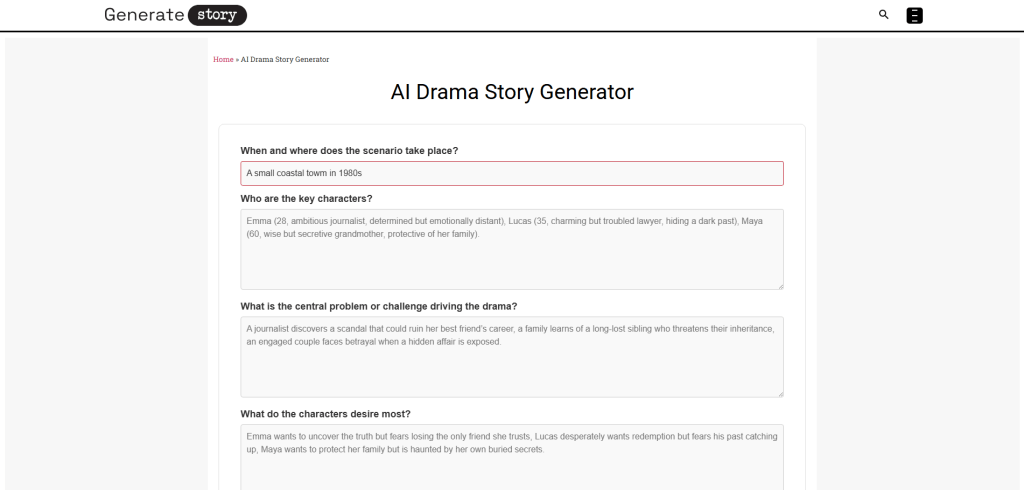
Begin with the setting, which establishes where and when your drama unfolds. You might describe a specific location and time period, like a quiet coastal town in the 1990s. This context helps ground your story and influences character behavior and plot development. The generator uses this information to create atmospheric details that enhance the emotional impact of your narrative.
Step 2: Defining Your Protagonist
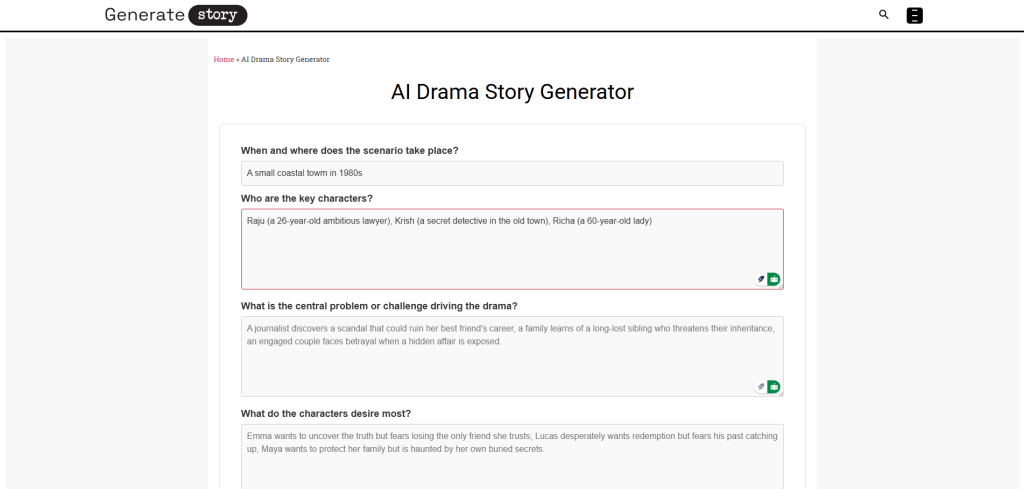
Next, you describe your main character, including their name, age, and key traits. For example, you might input “Elena, a 35-year-old journalist uncovering a government scandal.” This helps the AI understand who drives the story forward. The tool then develops this character’s motivations and emotional journey, drawing from AI character development techniques to create depth and authenticity in their portrayal.
Step 3: Establishing the Central Conflict
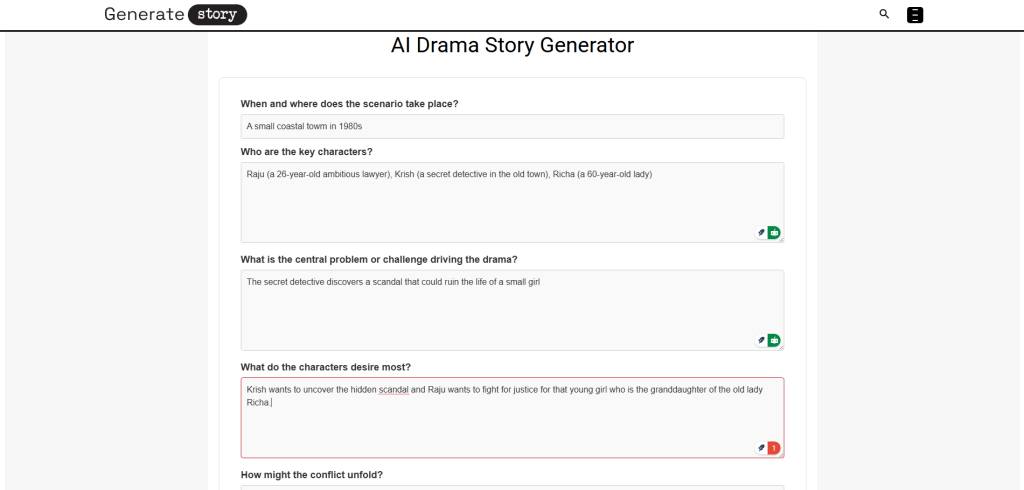
The heart of any drama is its conflict, which you define clearly in your input. You might describe something like “a woman discovers a family secret that changes everything she believed about her past.” This conflict drives the emotional tension and plot progression. The generator uses this to structure rising action, climax, and resolution while maintaining consistent dramatic intensity throughout the story.

Step 4: Selecting Tone and Mood
You choose the emotional quality of your story from options like tragic, hopeful, intense, or melancholic. This selection guides the AI in maintaining consistent emotional pacing and language choices. The tool ensures that dialogue, descriptions, and plot developments all align with your chosen tone to create a cohesive dramatic experience.
Step 5: Adding Optional Themes
If you include a theme, such as forgiveness and redemption, the generator weaves this concept throughout the narrative. It incorporates symbolic elements, character arcs, and plot points that explore and develop your chosen theme. This optional input helps create stories with deeper meaning and emotional resonance beyond the surface-level plot.
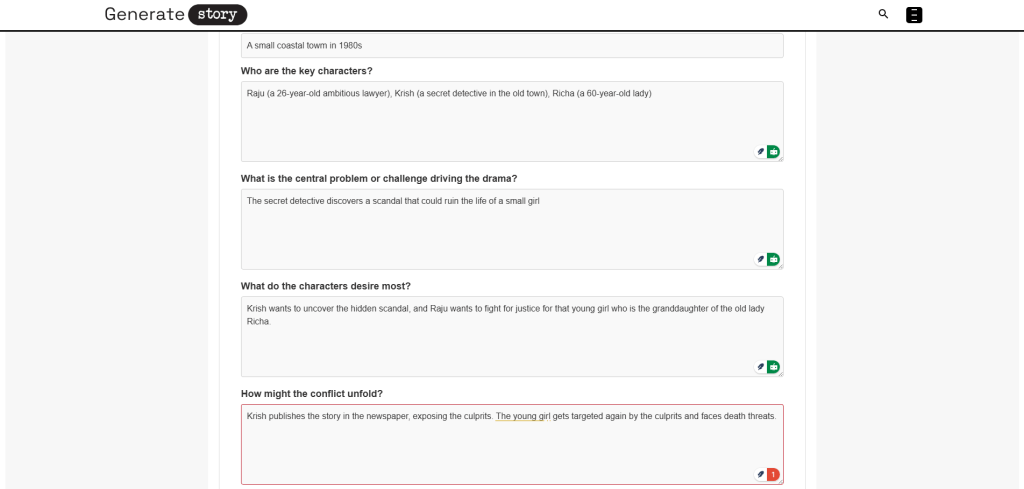
Once you provide these inputs, the AI processes them using natural language generation models trained on dramatic storytelling patterns. It constructs a narrative that incorporates your specific elements while following dramatic plot structures and character development principles. The result is a complete story ready for further refinement or immediate use.
Why Use GenerateStory’s Drama Story Generator?
Let’s talk about why a drama story generator matters for your creative process. Writing dramatic narratives requires balancing emotional depth, character complexity, and compelling conflict—elements that can challenge even experienced writers. This tool helps you navigate those challenges by providing structured creative support that enhances rather than replaces your storytelling voice.
The real value comes from how it handles the specific demands of dramatic writing. You’re working with tools that understand emotional pacing and character motivation, which is crucial when you’re trying to create stories that resonate emotionally. With over 400 million people using AI writing tools monthly, it’s clear that writers are finding real value in this collaborative approach to creativity.
Overcoming Emotional Storytelling Barriers
Drama writing often stalls when you struggle to maintain consistent emotional intensity throughout a story. The generator helps by ensuring your chosen tone—whether tragic, hopeful, or intense—permeates every aspect of the narrative. It keeps the emotional pacing consistent, which is something many writers find challenging when working on longer pieces or complex character arcs.
Developing Multidimensional Characters
Strong drama relies on characters with depth and authenticity. The generator uses your protagonist description to build characters with believable motivations and emotional complexity. This is particularly valuable because, as research shows, AI tools excel at developing character depth while leaving the creative direction in your hands. You maintain control over who your characters are while getting help making them feel real and relatable.
Structuring Complex Conflict
Dramatic conflict needs proper development from initial tension to resolution. The generator helps structure your central conflict using proven dramatic principles, ensuring it builds naturally throughout the story. This structural support is especially helpful when you’re working with intricate interpersonal dynamics or multi-layered problems that need careful pacing.
Saving Time on Foundation Building
Starting a new dramatic project often involves extensive groundwork before the actual writing begins. The generator handles much of this initial work by transforming your core ideas into a structured narrative foundation. This lets you focus more on refining the emotional beats and character moments that make drama compelling rather than getting stuck on basic plot construction.
Exploring Theme Development
When you include thematic elements like forgiveness or redemption, the generator weaves these concepts throughout your story organically. It helps ensure your theme emerges through character choices and plot developments rather than feeling forced or preachy. This subtle integration of theme is something many writers struggle with, particularly in shorter dramatic works.
Adapting to Different Dramatic Styles
The tool’s flexibility with tone and mood selection means you can experiment with various dramatic approaches without starting from scratch each time. Whether you’re writing intense psychological drama or hopeful character-driven stories, the generator adapts to your chosen style while maintaining the emotional authenticity that defines quality dramatic writing.
Frequently Asked Questions
How does the Drama Story Generator create original stories?
The Drama Story Generator uses AI trained on dramatic storytelling patterns to transform your inputs into unique narratives. It analyzes your setting, protagonist, conflict, tone, and theme to build emotionally charged stories with proper structure. The generator combines these elements using natural language generation, ensuring each story is original while following classic dramatic principles.
Can I use the generated stories for commercial projects?
Yes, stories created by the Drama Story Generator are yours to use for personal or commercial purposes. The tool serves as a creative assistant that helps you develop original content. You maintain ownership of the final work, though it's good practice to review and refine the output to ensure it meets your specific needs and standards.
What makes this different from other story generators?
The Drama Story Generator specializes in emotional depth and character-driven narratives specific to dramatic storytelling. Unlike general story generators, it focuses on interpersonal conflict, emotional pacing, and thematic development. This specialization helps create stories with the nuanced character relationships and emotional tension that define quality drama writing.
How accurate is the emotional tone in generated stories?
The Drama Story Generator maintains consistent emotional tone by aligning dialogue, descriptions, and plot developments with your selected mood. Whether you choose tragic, hopeful, intense, or melancholic, the AI ensures all story elements support that emotional quality. The tool's training on dramatic writing patterns helps it create authentic emotional pacing throughout the narrative.
Can I edit the generated story after creation?
Absolutely. The Drama Story Generator provides a complete story foundation that you can modify, expand, or refine. Many writers use the generated content as a starting point, then add their personal touches, deepen character development, or adjust plot elements. The tool gives you a structured narrative to work with rather than a final, unchangeable product.

A Ph.D. in English Literature from UMass Amherst with over 8 years of academic research experience, Ruth founded GenerateStory.io to bridge traditional story writing with AI-powered storytelling tools. She specializes in helping writers create compelling stories by combining her expertise in literary analysis with innovative technology solutions.
