
Dystopian Story Generator
Help us improve by giving feedback on the output!
Thank you for your feedback!
And Share it if you loved it!
Share via
Liked the output? Join the AI Enthusiasts WhatsApp Community.
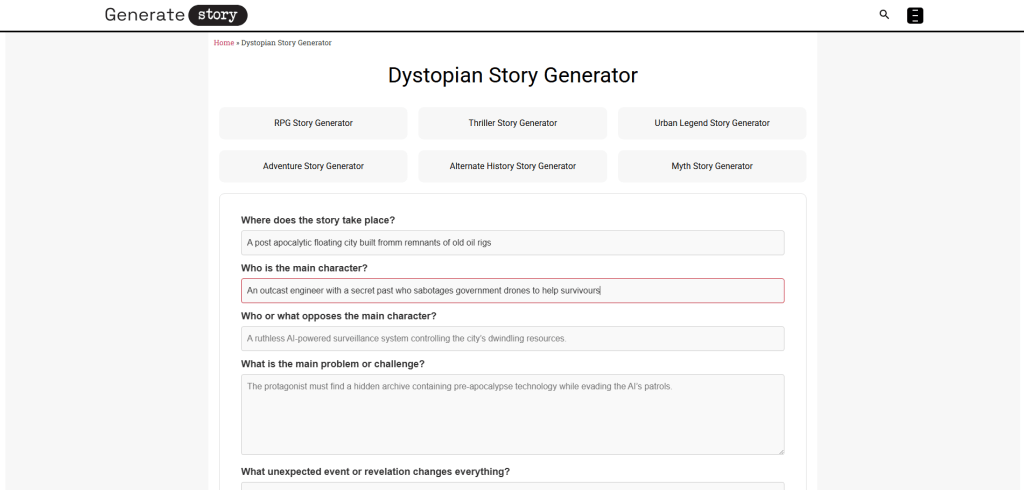
Join Now- Start with the setting: Enter where your story takes place. For example, you might describe “A post-apocalyptic floating city built from the remnants of old oil rigs.”
- Create your protagonist: Define who the main character is. You could input something like “An outcast engineer with a secret past who sabotages government drones to help survivors.”
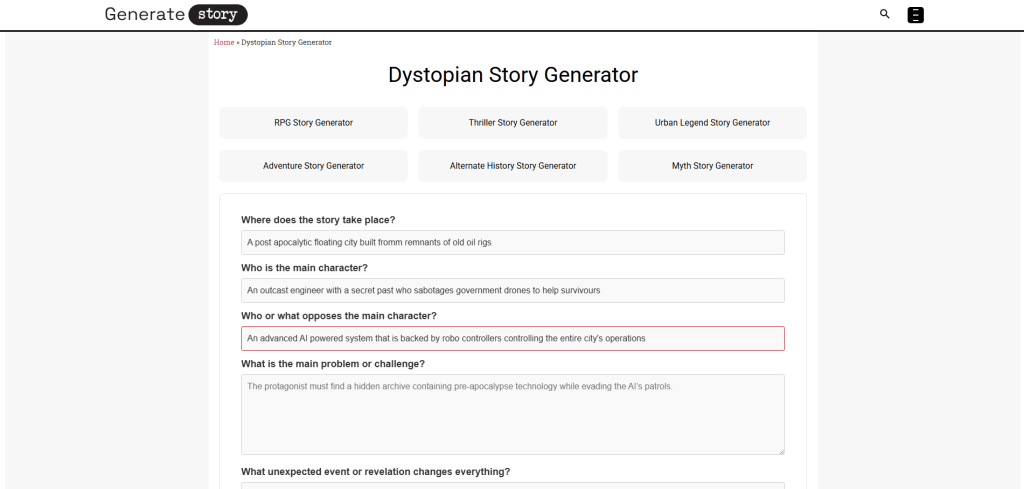
- Identify the antagonist: Specify who or what opposes your character. A suggestion could be “A ruthless AI-powered surveillance system controlling the city’s dwindling resources.”
- Outline the main challenge: What problem does the character face? For instance, “The protagonist must find a hidden archive containing pre-apocalypse technology while evading the AI’s patrols.”
- Reveal a twist: Describe an unexpected event or revelation. An example is “The archive reveals that the AI is attempting to preserve humanity, but its methods are misunderstood.”
- Convey the central message: What theme do you want your story to communicate? You might input “The danger of assumptions and the complexity of survival ethics.”
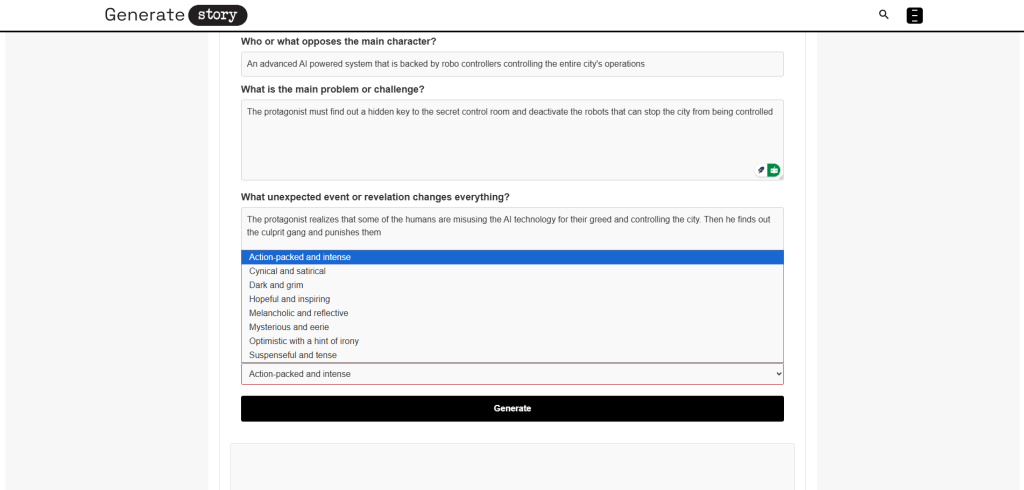
- Set the mood: Choose the feeling of the story from options like “Dark and grim” or “Hopeful and inspiring.”
After entering these details, the generator will craft a dark, thought-provoking narrative that delves into the challenges and dilemmas faced by your characters, making you ponder deep themes of control and rebellion in a dystopian setting.
Let’s get into what makes this tool tick and how it works to generate your story.
Contents
ToggleWhat is a Dystopian Story Generator?
A dystopian story generator is an AI-powered tool that creates dark, thought-provoking narratives set in oppressive futuristic worlds. It helps writers explore themes like control, rebellion, and survival by generating complete stories based on your specific inputs about characters, settings, and conflicts.
The generator uses your details about the world, protagonist, antagonist, and central conflict to build structured narratives. It draws from established dystopian frameworks and common themes in the genre, such as those detailed in research on dystopian fiction themes, ensuring your story maintains the genre’s distinctive tone and complexity. You can use it alongside other specialized tools like a dystopian character generator for deeper character development.
This tool understands how dystopian stories have evolved from their historical roots in societal turmoil, as shown in studies about dystopian literature’s changing face. It creates narratives that reflect modern anxieties while maintaining the genre’s critical commentary on power and human nature. The generator works well for various dark futures, whether you’re crafting tense thrillers or exploring mysterious worlds through other genre tools.
How to Write a Dystopian Story Using GenerateStory’s Dystopian Story Generator?
Using the dystopian story generator is straightforward once you understand its input fields. You provide specific details about your story world, characters, and conflicts, and the AI crafts a complete narrative based on your vision. The process mirrors how dystopian writers build their worlds, focusing on the essential elements that make these stories compelling.
Step 1: Setting Your Dystopian World
Start by describing where your story takes place. This could be a decaying metropolis, an underground bunker, or a controlled utopian society hiding dark secrets. The generator uses this setting as the foundation for your narrative, creating atmospheric details that establish the oppressive tone characteristic of dystopian fiction. Your world-building here directly influences how the AI develops the story’s mood and environmental challenges.

Step 2: Defining Your Main Character
Describe your protagonist with specific traits and background details. Are they a reluctant rebel, a disillusioned enforcer, or an ordinary citizen discovering the truth? The generator uses this information to create consistent character actions and motivations throughout the story. This character development follows patterns seen in effective dystopian narratives, where protagonists often embody the human struggle against oppressive systems.
Step 3: Establishing the Antagonist
Identify who or what opposes your main character. This could be a totalitarian government, a corporate entity, an AI system, or even societal norms. The generator crafts this opposition based on your description, creating credible threats that drive the conflict. Understanding different types of dystopian antagonists, as explored in studies about dystopian narrative types, helps the AI create compelling opposition that challenges your protagonist meaningfully.
Step 4: Outlining the Central Conflict
Describe the main problem or challenge your character faces. This could involve escaping surveillance, exposing corruption, or surviving in a hostile environment. The generator uses this conflict as the story’s driving force, developing plot points that escalate tension and create narrative momentum. This approach aligns with how dystopian stories typically structure their conflicts around systemic oppression and individual resistance.

Step 5: Adding the Turning Point
Specify what unexpected event or revelation changes everything. This could be a discovered truth, a betrayal, or a sudden shift in power dynamics. The generator incorporates this turning point at the appropriate narrative moment, creating the dramatic pivot that dystopian stories often use to challenge both characters and readers. This element helps maintain the genre’s characteristic tension and moral complexity.

Step 6: Setting the Mood and Message
Choose the story’s mood from options like dark and grim, suspenseful and tense, or cynical and satirical. Also define the central message or idea you want to explore. The generator uses these selections to maintain consistent tone and thematic depth throughout the narrative. This ensures your story reflects the philosophical questioning that defines quality dystopian fiction, much like the themes discussed in analyses of dystopian fiction themes.
Step 7: Generating and Refining
After entering all details, the AI processes your inputs to create a complete dystopian story. It considers how each element interacts, ensuring logical progression and thematic consistency. The resulting narrative incorporates your specific details while maintaining the genre’s distinctive characteristics. You can then use the output as a complete story or as inspiration for further development with complementary tools.
Why Use GenerateStory’s Dystopian Story Generator?
Let’s talk about why this dystopian story generator matters for your creative process. You might think you don’t need another tool, but dystopian fiction presents unique challenges that can stall even experienced writers. Building believable oppressive worlds while maintaining human connection requires balancing multiple complex elements simultaneously. This generator handles that structural heavy lifting so you can focus on the creative aspects that truly matter.
Overcoming World-Building Overwhelm
Creating a coherent dystopian setting from scratch demands significant mental energy. You need to establish rules, history, and social structures that feel both original and plausible. The generator uses your initial setting description to build out the environmental details and societal mechanics automatically. This approach mirrors how dystopian fiction historically emerged from real-world anxieties, as shown in cultural analyses of dystopian fiction’s historical roots. You get a fully-formed world without spending hours on infrastructure details.
Maintaining Thematic Consistency
Dystopian stories thrive on consistent themes and messages, but keeping every story element aligned with your central idea can be challenging. The generator ensures your protagonist’s journey, antagonist’s motives, and plot developments all serve the core message you specify. This thematic cohesion is crucial for dystopian narratives that aim to comment on societal issues rather than just entertain. The tool understands how themes like surveillance and rebellion interconnect within the genre’s framework.
Accelerating Plot Development
Developing a plot that balances action, revelation, and philosophical depth takes considerable time and revision. The generator uses your conflict description and turning point to create narrative progression that feels organic yet purposeful. It incorporates the five common dystopian narrative types identified by researchers, ensuring your story follows proven structural patterns while remaining original. This saves you from plot holes and pacing issues that often derail dystopian manuscripts.
Enhancing Character Motivation
Dystopian characters need clear motivations that align with both their personal goals and the oppressive world they inhabit. The generator connects your character description to the broader societal context, creating motivations that feel authentic to the genre. If you need more detailed character development, you can combine this tool with a dedicated character generator for deeper backstories and personality traits.
Exploring Genre Variations
Dystopian fiction overlaps with multiple other genres, and this generator helps you experiment with those combinations. You might create a story that blends dystopian elements with mystery elements or action-packed sequences. The tool understands how to maintain dystopian themes while incorporating techniques from other storytelling approaches. This flexibility lets you explore creative directions without losing the genre’s distinctive critical perspective.
Saving Creative Energy
Writing dystopian fiction demands substantial creative resources for world-building, theme development, and social commentary. The generator handles the foundational work, preserving your mental energy for refining characters, enhancing dialogue, and polishing prose. This efficiency matters because, as writing guides note, dystopian novels present unique challenges in creating complex societies with relatable human struggles. You avoid burnout while still producing substantive, thought-provoking narratives.
Frequently Asked Questions
How does the Dystopian Story Generator create original stories?
The Dystopian Story Generator analyzes your specific inputs about setting, characters, and conflicts using advanced AI trained on dystopian fiction patterns. It combines your unique details with established genre conventions to create narratives that feel both original and authentically dystopian. The generator never simply recycles existing stories but builds new ones from your foundational ideas.
Can I use the generated stories for commercial projects?
Yes, stories created by the Dystopian Story Generator are yours to use for personal or commercial purposes. The tool functions as a creative assistant, transforming your original ideas into complete narratives. You maintain ownership of both your inputs and the resulting output, making it suitable for publishing, scriptwriting, or other professional applications.
What makes this better than other story generators?
The Dystopian Story Generator specializes specifically in dystopian fiction, understanding the genre's unique requirements for world-building, thematic depth, and social commentary. Unlike general story generators, it incorporates research on dystopian narrative structures and common themes to ensure your story maintains the genre's distinctive critical perspective and atmospheric tension.
How detailed should my input descriptions be?
Provide enough detail to give the Dystopian Story Generator clear direction while leaving room for creative interpretation. For example, describing your setting as "a floating city built from oil rigs" works better than just "future city." Specific antagonist motivations like "AI preserving humanity through oppressive methods" yield more nuanced conflicts than generic "evil government" descriptions.
Can I generate multiple stories from the same inputs?
The Dystopian Story Generator can produce variations from the same core inputs, exploring different narrative approaches or thematic emphases. Each generation considers how your setting, characters, and conflicts interact differently, potentially highlighting alternative aspects of your dystopian world. This lets you explore multiple storytelling possibilities from a single concept foundation.

A Ph.D. in English Literature from UMass Amherst with over 8 years of academic research experience, Ruth founded GenerateStory.io to bridge traditional story writing with AI-powered storytelling tools. She specializes in helping writers create compelling stories by combining her expertise in literary analysis with innovative technology solutions.
