
Fiction Story Generator
Help us improve by giving feedback on the output!
Thank you for your feedback!
And Share it if you loved it!
Share via
Liked the output? Join the AI Enthusiasts WhatsApp Community.
Join NowCrafting a compelling narrative becomes a straightforward journey when you have the right guide, helping you bring your ideas to life. That’s what a Fiction Story Writer helps with.
You start by telling the fiction story writer what kind of tale you want to tell. You will guide it through a few simple inputs. The generator then processes these details to give you a unique story draft.
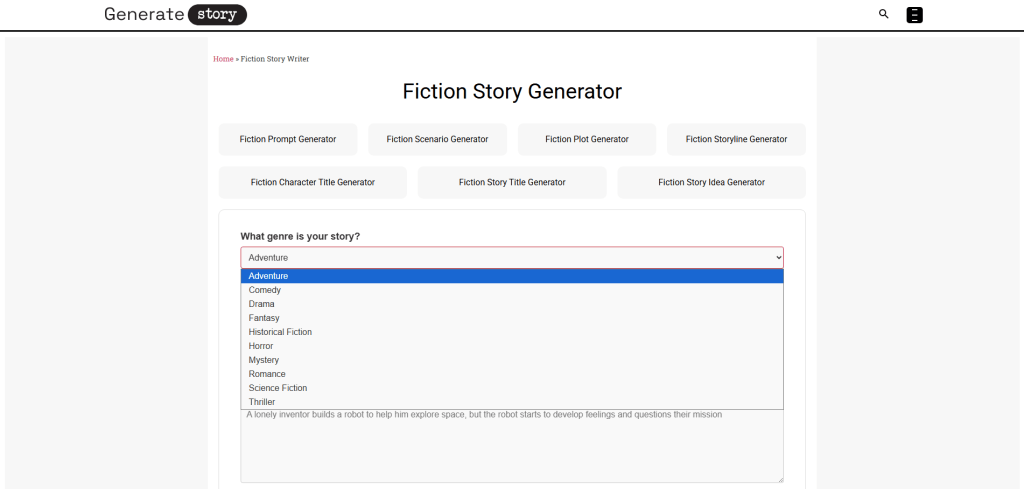
First, you choose the genre for your story from a list. This sets the overall tone and style. For example, you can pick “Fantasy” if you are looking for a magical adventure or “Mystery” if you want a puzzle to solve.
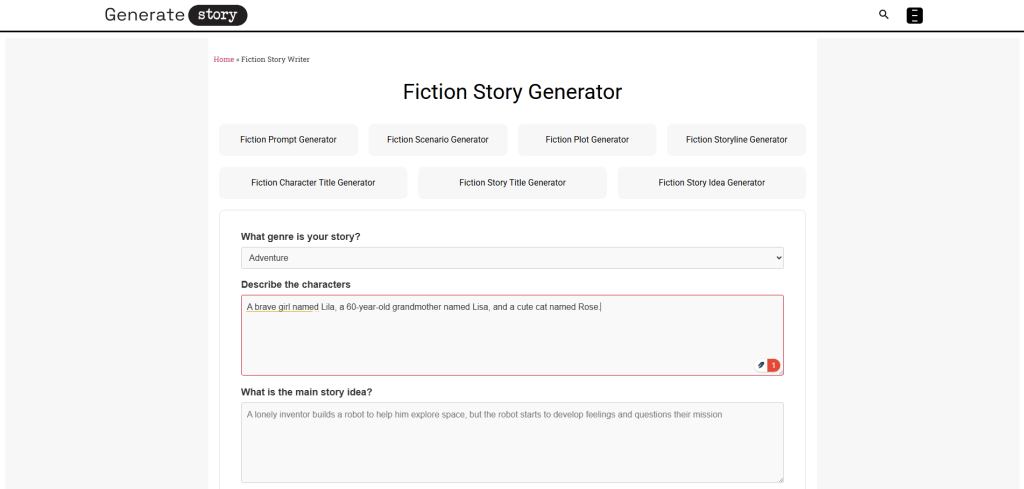
Next, you describe your characters. Think about who they are and what makes them interesting. You might write something like: “A brave girl named Lila, her talking cat sidekick, and a greedy wizard trying to steal her dreams.” This helps the generator understand the personalities involved.
Then, you explain your main story idea. This is the core plot of your narrative. An example could be: “A lonely inventor builds a robot to help him explore space, but the robot starts to develop feelings and questions their mission.”
After that, you tell the generator where your story takes place. The setting adds depth and atmosphere to your tale. You might input “A futuristic city under a dome” for a science fiction story or “A hidden village in a misty forest” for a fantasy narrative.
Finally, you select your desired story length. You can choose from “Flash Fiction (under 500 words),” “Short Story (500–700 words),” or “Longer Story (1000 words).” This helps to define the scope of the output and decide the length of the story.
After you provide these details, you’ll receive a unique draft of a story. What you get back isn’t always a perfect, polished piece, and that’s okay. It gives you a strong starting point, often sparking new ideas you hadn’t considered. You can then take this draft and refine it, adding your own voice and specific details to make it truly yours. This output can be a great foundation for creative fiction writing, whether you’re working on a short story or building ideas for a larger novel.
Now, let’s explore what this fiction story writer actually is and how it technically works to craft these narratives.
Contents
ToggleWhat is a Fiction Story Writer?
A fiction story writer is an AI-powered tool that helps you create complete fictional narratives by transforming your ideas into structured stories with developed characters, plots, and settings. It serves as a creative partner for writers who want to generate original fiction content across various genres and lengths.
The tool works by taking your specific inputs about genre, characters, story idea, setting, and desired length to craft a coherent narrative. It analyzes your character descriptions and main concept to build a story that follows proper narrative structure, whether you’re writing a quick flash fiction piece or a longer short story. This approach helps you overcome creative blocks while maintaining your unique voice and vision.
Many fiction writers find that understanding current market trends helps shape their creative decisions. For instance, recent fiction sales data shows certain genres like mystery and romance perform particularly well in digital formats. The tool can help you explore these popular categories while also developing strong character development and plot structures that resonate with modern readers.
How to Write a Fiction Story Using GenerateStory’s Fiction Story Writer?
Using a fiction story writer involves providing specific details about your story concept and letting the AI build upon your foundation. You start by selecting your preferred genre from options like mystery, romance, or science fiction, then describe your main characters and their personalities. The tool uses these inputs to generate a complete narrative that matches your vision while maintaining proper story structure.
Step 1: Choosing Your Story Genre
Selecting your genre sets the tone and style for your entire story. The dropdown menu includes popular fiction categories that align with current reader preferences. Mystery and thriller genres, for example, account for a significant portion of adult fiction sales, making them solid choices if you’re considering market trends. Your genre selection guides the AI’s approach to dialogue, pacing, and thematic elements throughout the generated story.
Step 2: Developing Your Characters
Character descriptions form the heart of your story. You provide details about your main characters’ personalities, relationships, and motivations in the text area. The AI analyzes these descriptions to create consistent character behavior and dialogue patterns. For deeper character development, you might consider using a dedicated character generator to refine your protagonists and antagonists before inputting them here.
Step 3: Crafting Your Core Story Idea
Your main story idea serves as the foundation for the narrative. You describe the central conflict, theme, or concept you want to explore. The AI takes this premise and expands it into a full story arc with rising action, climax, and resolution. This is where your creative vision meets the tool’s structural knowledge, resulting in a coherent story that maintains your original idea while adding professional narrative elements.

Step 4: Setting the Scene
The location input defines your story’s physical environment and atmosphere. Whether you choose a futuristic city, historical setting, or imaginary world, the setting influences how characters interact and events unfold. The AI uses your location description to create vivid sensory details and environmental factors that enhance the story’s realism and immersion.

Step 5: Determining Story Length
Story length selection affects the narrative’s depth and pacing. You choose from flash fiction for quick reads, short stories for more developed plots, or longer formats for complex storytelling. This choice aligns with reader preferences, as content consumption data shows most readers prefer shorter formats for digital reading. The AI adjusts descriptive details, subplots, and character development based on your selected word count range.
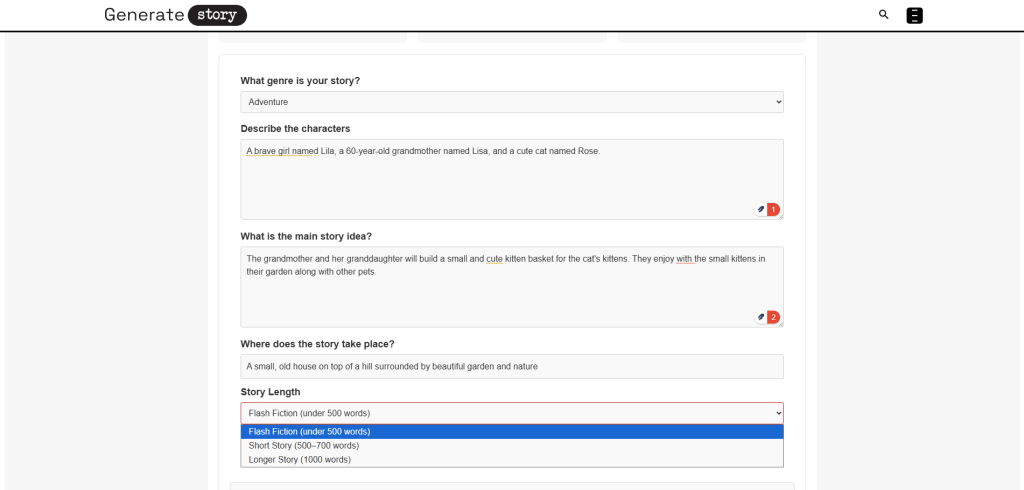
Step 6: Generating and Refining
After providing all inputs, the AI processes your information to create a complete story. It weaves together your genre choice, character details, core idea, setting, and length preference into a cohesive narrative. The generated story maintains your original concepts while adding professional structural elements. You can then refine the output or use additional tools like a plot generator to enhance specific story elements.
Why Use GenerateStory’s Fiction Story Writer?
Let’s talk about why this fiction story writer matters for your creative process. Writing fiction involves so many moving parts—character development, plot structure, setting descriptions, and maintaining a consistent tone. The tool helps you manage all these elements simultaneously while keeping your unique voice intact. It’s particularly valuable when you’re working against deadlines or need to produce content regularly.
Many writers struggle with maintaining output consistency, especially when balancing creative work with other responsibilities. The generator helps bridge that gap by providing structured narratives that you can refine and personalize. This approach aligns with how modern readers consume content, as recent data shows 75% of readers prefer shorter formats under 1,000 words for digital reading.
Overcoming Creative Blocks
Every writer faces moments when ideas just won’t flow. The fiction story writer acts as a creative spark plug, generating complete narratives from your basic concepts. You provide the seed—like a character description or setting idea—and the tool builds a full story around it. This eliminates the paralysis of staring at a blank page while ensuring the output still reflects your original vision.
Exploring Multiple Genres
Stepping outside your usual genre can feel daunting without proper understanding of its conventions. The tool handles the technical aspects of different fiction categories, whether you’re experimenting with mystery tropes or science fiction world-building. This flexibility lets you test ideas across genres without investing weeks in research. Given that certain genres dominate market sales, this exploration can also inform your writing strategy.
Developing Consistent Characters
Characters need to behave consistently throughout a story, which becomes challenging as narratives grow more complex. The AI analyzes your character descriptions and maintains their personality traits, speech patterns, and motivations across the entire generated story. For more detailed character work, you might first develop personas using a dedicated character development tool before bringing them into your main narrative.
Structuring Complete Narratives
Many writers have great ideas but struggle with proper story structure—pacing, rising action, climax, and resolution. The tool automatically incorporates these structural elements while maintaining your original concept. It ensures your story has narrative momentum and satisfies reader expectations for a complete arc, whether you’re creating flash fiction or longer short stories.
Saving Time on Draft Creation
Creating first drafts consumes significant time that could be spent on editing and refinement. The generator produces complete drafts based on your specifications, giving you a solid foundation to work from rather than starting from scratch. This efficiency is particularly valuable for writers producing content regularly or working with tight deadlines.
Maintaining Your Creative Voice
Unlike generic story generators, this tool builds narratives around your specific inputs and ideas. Your character descriptions, setting details, and core concept remain central to the generated story. The AI enhances and structures these elements rather than replacing them, ensuring the final output still feels authentically yours while benefiting from professional narrative techniques.
Frequently Asked Questions
What makes this fiction story writer different from other AI writing tools?
The fiction story writer focuses specifically on narrative structure and genre conventions rather than just generating text. It analyzes your character descriptions, setting details, and core story idea to create a coherent plot with proper pacing and resolution. This specialized approach ensures your generated story maintains structural integrity while preserving your creative vision.
Can the fiction story writer help with writer's block for longer projects?
Yes, the fiction story writer serves as an effective solution for overcoming creative blocks. You provide a basic character concept or setting idea, and the tool generates a complete narrative structure around it. This approach helps you move past blank page paralysis while ensuring the output aligns with your original vision and genre requirements.
How does the fiction story writer handle different genre requirements?
The fiction story writer adapts its narrative approach based on your selected genre. For mystery stories, it incorporates clues and reveals. Romance narratives focus on relationship development and emotional beats. Science fiction and fantasy genres include appropriate world-building elements. Each genre selection triggers specific structural patterns and thematic conventions within the generated story.
Can I use the fiction story writer for commercial writing projects?
The fiction story writer generates original content based on your inputs, making it suitable for commercial projects. The tool helps create draft narratives that you can refine, edit, and publish. Many professional fiction writers use similar tools for brainstorming, drafting, and overcoming creative challenges in their commercial work.
Does the fiction story writer work for experimental or unconventional story formats?
The fiction story writer primarily focuses on traditional narrative structures but can accommodate some unconventional elements through your specific inputs. While it excels at standard story arcs, you can guide unconventional approaches through detailed character descriptions and unique story ideas. The tool will incorporate your experimental concepts within a coherent narrative framework.

A Ph.D. in English Literature from UMass Amherst with over 8 years of academic research experience, Ruth founded GenerateStory.io to bridge traditional story writing with AI-powered storytelling tools. She specializes in helping writers create compelling stories by combining her expertise in literary analysis with innovative technology solutions.
