
Mini Scenario Generator
Help us improve by giving feedback on the output!
Thank you for your feedback!
And Share it if you loved it!
Share via
Liked the output? Join the AI Enthusiasts WhatsApp Community.
Join NowThe Mini Scenario Generator is your go-to tool for sparking creativity with compact and imaginative scenarios. It’s a straightforward process that helps you generate quick writing prompts or micro-stories when your mind feels blank. Here’s how to use it step-by-step.
- Select the Genre: Start by choosing the genre of your scenario from the dropdown menu. Your options include Science Fiction, Fantasy, Romance, and more. Each genre will set a different tone for your scenario.
- Identify the Protagonist: Next, input who your main character will be. This could be anyone from a stranded astronaut to a time-traveling detective. Whatever you choose, it will shape the story.
- Choose the Tone: Finally, select a tone from the provided options. Whether it’s Suspenseful, Lighthearted, Dark, or any of the other choices, the tone will guide how the narrative unfolds.
Once you provide these details, the Mini Scenario Generator will create a unique and engaging one-paragraph scenario for you to work with. You can use these scenarios as writing prompts, character interactions, or even for role-playing exercises. Expect fresh ideas that will jumpstart your creative process!
Let’s get into what exactly makes this tool tick and how it works behind the scenes.
Contents
ToggleWhat is a Mini Scenario Generator?
A mini scenario generator is an AI-powered tool that creates compact, one-paragraph scenarios for quick writing prompts, micro-stories, or rapid ideation sessions. It helps writers, roleplayers, and content creators generate focused narrative situations with clear characters and conflicts in minimal space.
The generator works by processing your chosen genre, protagonist details, and preferred tone to produce concise scenarios that follow effective scenario-based writing principles. You might select a science fiction genre with a stranded astronaut protagonist and suspenseful tone, and the AI crafts a complete micro-narrative around these elements. This approach mirrors how random scenario generators operate but with more focused input control.
These generated scenarios serve as starting points for various creative applications, from writing prompt development to character interaction exercises. The tool’s output resembles the compact, impactful formats found in micro fiction prompts, providing just enough detail to spark creativity without overwhelming the user with excessive information.
How to Write a Mini Scenario Using Generatestory’s Mini Scenario Generator?
Using the mini scenario generator is straightforward once you understand its three input fields. Each field serves a specific purpose in shaping your final scenario output. The tool processes these inputs through specialized AI models trained on narrative structures and genre conventions.
Selecting Your Genre

Start by choosing your genre from the dropdown menu. This selection determines the narrative framework and tropes the AI will employ. A mystery genre triggers different story elements than a romance or science fiction selection. The generator uses this choice to establish appropriate settings, conflict types, and resolution patterns specific to your chosen category.
Defining Your Protagonist

Enter your main character details in the text field. This input should describe who your protagonist is and their current situation. The AI analyzes this information to create character-appropriate scenarios that align with your protagonist’s likely motivations and challenges. For more detailed character development, you might consider using a dedicated character generator beforehand.
Setting the Tone
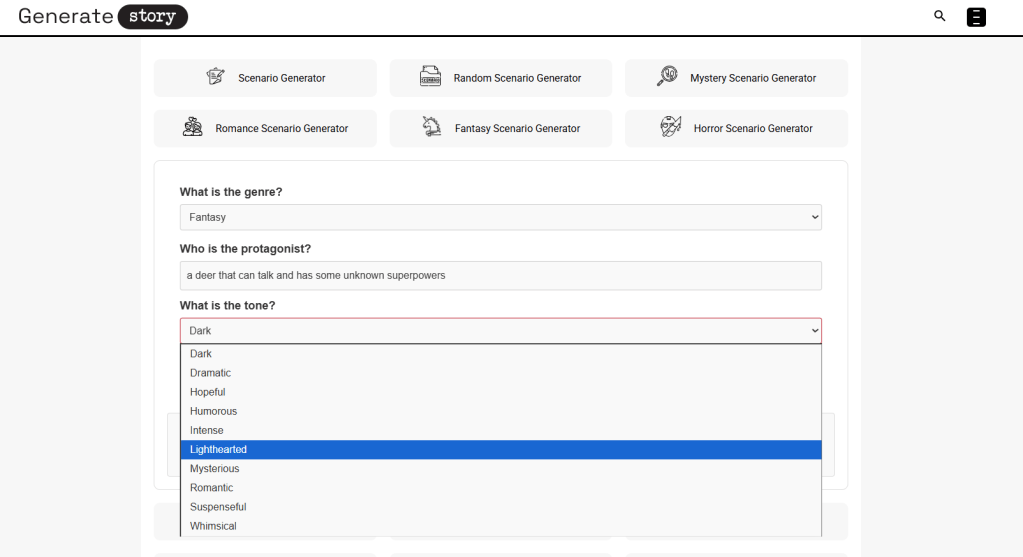
Choose your desired tone from the available options. This selection guides the AI’s language choices and emotional direction. A suspenseful tone creates different sentence structures and pacing than a lighthearted or humorous approach. The generator adapts its output to match this emotional quality while maintaining consistency with your other inputs.
Processing and Output
After submitting your inputs, the AI processes them through multiple layers of analysis. It first cross-references genre conventions with your protagonist details, then applies tone-appropriate language patterns. The system follows structured scenario development principles to ensure narrative coherence despite the compact format.
Result Interpretation

The generated scenario appears as a single paragraph containing a complete narrative situation. This output includes your protagonist facing a specific challenge or opportunity within your chosen genre framework. The scenario maintains your selected tone throughout while providing enough detail to serve as either a writing prompt or a complete micro-story.
Practical Applications
Use these generated scenarios for quick writing exercises, roleplaying setups, or creative warm-ups. The compact format makes them ideal for rapid ideation sessions where you need multiple starting points without extensive reading. For expanding these mini scenarios into fuller narratives, you might later use an story expander tool.
Why Use Generatestory’s Mini Scenario Generator?
Let’s talk about why this tool matters for your creative process. The mini scenario generator solves specific problems writers face daily, from blank page anxiety to repetitive idea generation. It gives you focused starting points that respect your time while sparking genuine creativity. The value comes from how it handles the balance between structure and creative freedom.
Overcoming Initial Creative Hurdles
Starting is often the hardest part of writing. This generator eliminates that initial resistance by providing complete scenarios ready for development. You get a protagonist with clear motivations, a genre-appropriate conflict, and tone-consistent language all in one package. It’s like having a creative partner who sets up the perfect writing conditions for you.
Efficient Idea Validation
Testing story concepts becomes much faster with mini scenarios. Instead of writing pages to see if an idea works, you generate multiple scenarios in minutes. Try a stranded astronaut in science fiction with suspenseful tone, then switch to humorous fantasy with the same protagonist. The generator helps you explore variations quickly, which is perfect for rapid ideation sessions where quantity leads to quality.
Genre and Tone Exploration
Writers often stick to familiar genres and tones because branching out feels risky. This tool lets you experiment safely. Want to try dark romance instead of your usual lighthearted adventure? The generator provides professionally structured scenarios in unfamiliar territory. You can study how the AI handles mystery elements or romantic tension without committing to a full project.
Character Development Testing
Your protagonist’s true nature emerges when faced with specific scenarios. This generator creates those testing moments efficiently. See how your character reacts to a sudden betrayal, an unexpected opportunity, or a moral dilemma. The scenarios serve as character stress tests, revealing depths you might not discover through standard outlining methods.
Creative Cross-Training
Regular use builds your storytelling muscles across different narrative approaches. Generating scenarios in various genres and tones develops your flexibility as a writer. You start recognizing patterns in how fantasy scenarios differ from historical fiction or thriller setups. This cross-training improves your overall narrative intuition.
Collaboration and Teaching Tool
The generator works wonderfully for group writing sessions or teaching environments. Everyone starts with the same scenario but develops it differently, creating fascinating comparisons. For writing instructors, it provides consistent prompt quality across student groups. The structured approach follows effective scenario-based writing principles that make learning outcomes more predictable.
Integration with Larger Projects
These mini scenarios fit into bigger creative workflows. Use them as chapter prompts within a larger novel, as backstory moments for characters, or as writing sprints between major sessions. When you need to expand a particularly compelling scenario, tools like the story expander can develop it into fuller narratives while maintaining your original tone and direction.
Frequently Asked Questions
What types of scenarios can the Mini Scenario Generator create?
The Mini Scenario Generator produces compact, one-paragraph scenarios across ten major genres including science fiction, fantasy, romance, thriller, and mystery. It combines your chosen genre with specific protagonist details and tone preferences to create focused narrative situations. The AI ensures each scenario maintains proper genre conventions while adapting to your specified emotional quality.
How does the AI ensure scenario quality and coherence?
The Mini Scenario Generator uses specialized AI models trained on narrative structures and genre conventions. It cross-references your genre selection with protagonist details, then applies tone-appropriate language patterns. The system follows structured scenario development principles to maintain narrative coherence despite the compact format, ensuring each scenario presents a complete story situation.
Can I use generated scenarios for commercial projects?
Yes, scenarios created by the Mini Scenario Generator can be used for commercial projects. The AI-generated content serves as creative starting points that you then develop into original work. Many writers use these scenarios as prompts for stories, games, or other creative content they later publish or monetize.
How specific should my protagonist description be?
Your protagonist description should include key details about their identity and current situation, but avoid excessive backstory. The Mini Scenario Generator works best with concise descriptions like "a stranded astronaut" or "a detective with trust issues." These brief descriptions give the AI enough character context to create appropriate scenarios without overwhelming the narrative with unnecessary details.
What's the difference between this and other scenario generators?
The Mini Scenario Generator specializes in compact, one-paragraph scenarios rather than lengthy story outlines. It focuses on rapid ideation and quick writing prompts rather than comprehensive plot development. This makes it ideal for writers needing quick creative sparks, writing exercises, or character testing scenarios without committing to extensive narrative development.

A Ph.D. in English Literature from UMass Amherst with over 8 years of academic research experience, Ruth founded GenerateStory.io to bridge traditional story writing with AI-powered storytelling tools. She specializes in helping writers create compelling stories by combining her expertise in literary analysis with innovative technology solutions.
