
Subplot Generator
Help us improve by giving feedback on the output!
Thank you for your feedback!
And Share it if you loved it!
Share via
Liked the output? Join the AI Enthusiasts WhatsApp Community.
Join NowYour storytelling can reach new heights with the right subplot. This generator helps craft intricate subplots that enhance your main narrative. Using it is straightforward, which means you can focus on your creativity rather than getting stuck in the details. Here’s how to use the subplot generator step by step:
- Select Your Genre – First, choose the main genre of your story from the dropdown menu. Options include genres like Fantasy, Romance, or Horror, or you can keep it open to any genre.
- Describe the Main Plot – In the space provided, describe your main plot. For instance, you might write, “A young knight must retrieve a magical relic to save her kingdom from a deadly curse.”
- Choose the Conflict Type – Next, pick what kind of conflict will drive your subplot. You can choose from conflicts like Internal Struggle, Romantic Tension, or Betrayal & Deception.
- Incorporate Key Characters – Specify which characters should be part of the subplot. For example, you might include “The protagonist and their best friend,” or “A side character with hidden motives.”
- Add Extra Details – Use the final textarea to include any additional details or themes that are necessary. This could involve specific elements like “Must have a secret society” or “Should involve time travel.”
Once you’ve entered this information, the generator will work its magic. You can expect a richly crafted subplot that deepens your story and enhances character development. Whether you need a new twist for your writing or want to deepen existing relationships, this tool is here to help.
Let’s get into what makes this generator tick and how it draws on various inputs to create engaging subplots tailored to your narrative.
Contents
ToggleWhat is a Subplot Generator?
A subplot generator is an AI-powered tool that creates meaningful side stories involving supporting characters or thematic elements to add depth and complexity to your main narrative. It helps writers develop B-plots that enrich the primary story without overshadowing it, making your fiction writing more layered and engaging.
The generator works by analyzing your main plot details, genre preferences, and character relationships to produce subplots that naturally complement your central story. It understands how effective subplots often mirror or contrast the main story’s themes, strengthening the overall narrative structure. This approach ensures your side stories feel organic rather than tacked on, much like how classic literature uses subplots to add emotional layers and character depth.
You provide key elements like your main conflict, desired subplot tension, and involved characters. The AI then generates subplot ideas that integrate seamlessly with your primary storyline. This process draws from established storytelling techniques where subplots enrich the journey by providing context and highlighting different facets of characters or themes. The tool can work alongside other writing aids like a story conflict generator or character development tools to create fully realized narratives.
How to Write a Subplot Using Generatestory’s Subplot Generator?
Using a subplot generator is straightforward once you understand its core functions. You start by providing basic information about your main story, then the tool processes these inputs to create meaningful side narratives that enhance your primary plot. The key is giving the AI enough context to work with while keeping your creative vision intact.
Setting Your Main Story Foundation
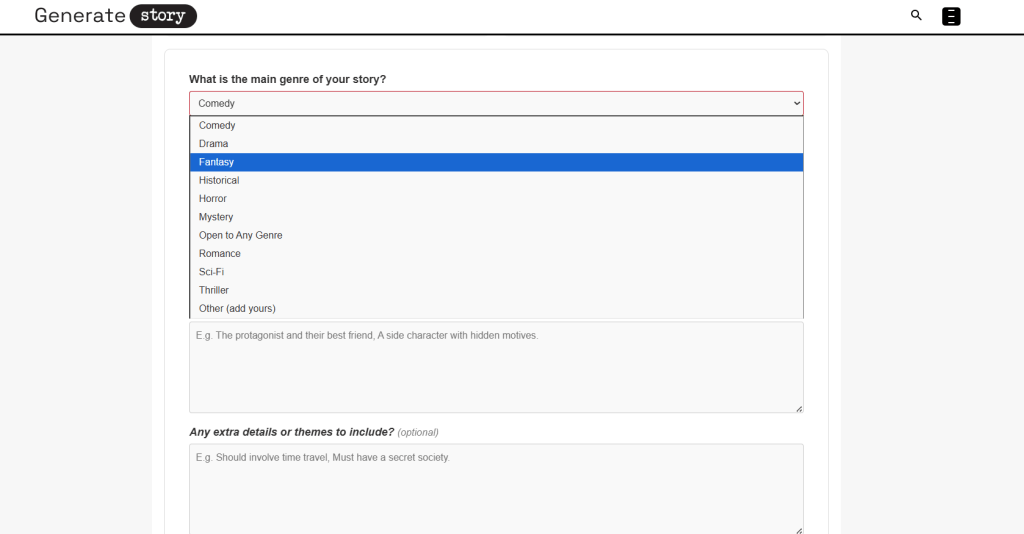
Begin by selecting your story’s genre from the dropdown menu. This tells the AI whether you’re working with fantasy, mystery, romance, or other fiction writing styles. The genre choice helps the generator understand the tone and conventions it should follow. Next, you describe your main plot in the text area. Be specific here—include your protagonist’s goal, the central conflict, and any key stakes. A detailed main plot description gives the AI a solid foundation to build complementary subplots.
Defining Subplot Conflict and Characters

The third step involves choosing the type of conflict that should drive your subplot. You can select from options like internal struggle, romantic tension, or betrayal. This determines the emotional core of your side story. Then you specify which characters should be involved in the subplot. Mentioning secondary characters here helps the AI create relationships and interactions that feel authentic to your existing cast. Remember that effective subplots often explore supporting characters’ journeys while maintaining relevance to the main narrative.
Adding Thematic Depth and Extra Details
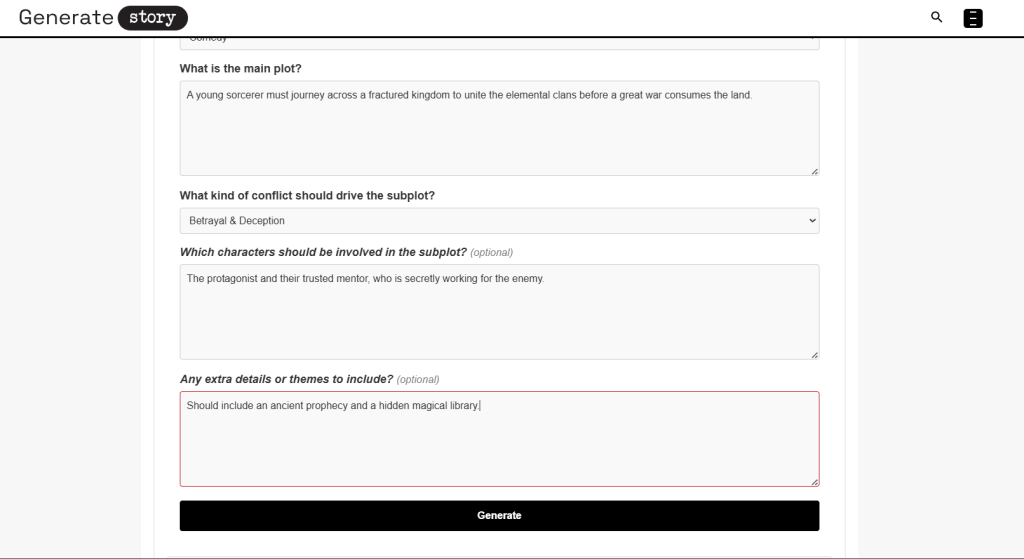
The final input fields let you add extra details and themes you want incorporated. This is where you can suggest specific elements like time travel, secret societies, or particular moral dilemmas. These details help the AI tailor the subplot to your unique story world. The generator uses this information to create subplots that reinforce your main themes through similar or contrasting events, much like how professional writers use thematic echoes to strengthen their narratives.
Generating and Refining Your Results
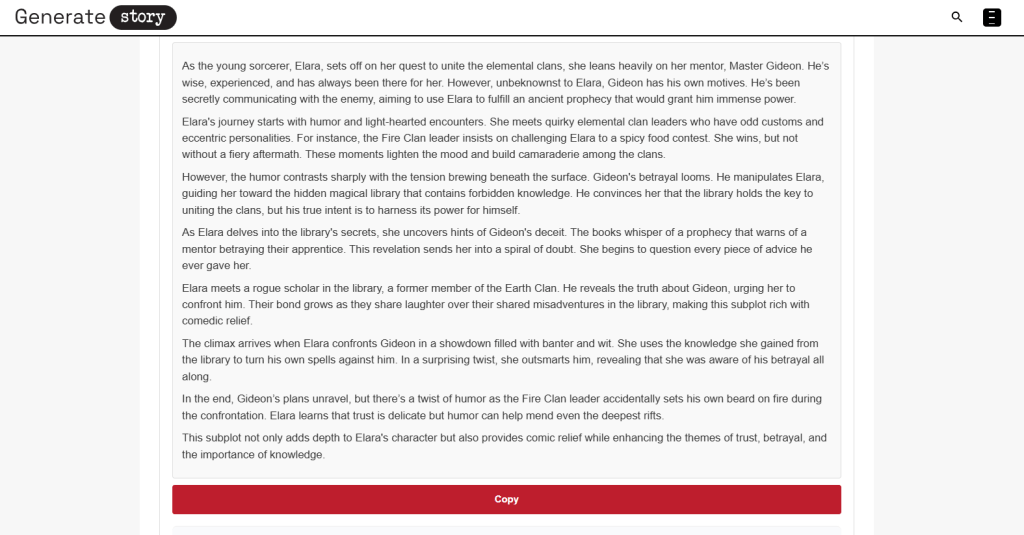
After submitting your inputs, the AI analyzes all elements to generate subplot options. It considers how each potential subplot connects to your main story, develops your characters, and contributes to overall narrative depth. The tool draws from established storytelling principles where subplot resolutions should contribute meaningfully to the climax or conclusion. You can generate multiple options and combine elements from different suggestions, using the output as a springboard for your own creative development alongside other tools like plot twist generators or dialogue tools.
Why Use Generatestory’s Subplot Generator?
Let’s talk about why a subplot generator matters for your writing process. Many writers struggle with creating side stories that actually enhance their main narrative rather than distract from it. The challenge isn’t just coming up with additional plotlines—it’s crafting subplots that feel necessary to the overall story. This is where specialized tools make a significant difference in your creative workflow.
Eliminates the Blank Page Problem
Starting a subplot from scratch can feel overwhelming, especially when you’re already deep in your main story development. The generator gives you concrete starting points instead of staring at an empty page. You provide your core elements, and it returns fully-formed subplot concepts that connect directly to your existing narrative. This approach saves you from the paralysis that often comes with adding complex layers to your story structure.
Ensures Thematic Relevance
The tool automatically ensures your subplots connect meaningfully to your main themes. When you input your primary conflict and genre, the AI analyzes how secondary stories can reinforce or contrast your central ideas. This creates the kind of thematic echoes that strengthen narratives in professional fiction. The generated subplots never feel random because they’re built from your story’s DNA.
Develops Supporting Characters Organically
Secondary characters often get neglected in storytelling, but they’re crucial for making your world feel lived-in. The generator uses your character inputs to create subplots that naturally develop these supporting roles. If you mention a side character with hidden motives, it will craft a subplot that explores their backstory and motivations. This approach transforms flat characters into multidimensional people who contribute to the main narrative’s depth.
Saves Time on Structural Planning
Figuring out how subplots should begin, develop, and resolve within your main story timeline takes considerable planning effort. The generator handles this structural heavy lifting by creating subplots with built-in narrative arcs that fit your story’s progression. This lets you focus on writing rather than plotting, which is particularly helpful when you’re working with complex story plot structures that need careful coordination.
Provides Fresh Perspectives
Sometimes you’re too close to your story to see where additional layers could enhance it. The generator offers objective suggestions that might not occur to you during the writing process. It can propose subplot conflicts that contrast with your main story’s tone, creating the kind of balance that keeps readers engaged through varied emotional experiences. These unexpected suggestions often lead to breakthroughs in your overall narrative development.
Maintains Consistency With Main Plot
The tool ensures all generated subplots maintain consistency with your established story world and rules. If you’re writing fantasy with specific magic systems, the subplots will operate within those parameters. This prevents the common problem of subplots feeling disconnected from the main narrative’s reality. The AI cross-references all your inputs to create side stories that feel like authentic extensions of your primary plot rather than separate entities.
Frequently Asked Questions
What kind of subplots can the Subplot Generator create?
The Subplot Generator creates meaningful side stories based on your specific inputs. It can generate romantic subplots, mystery arcs, character backstory explorations, and thematic B-plots that complement your main narrative. The tool analyzes your genre, main conflict, and character relationships to produce subplots that feel organic to your story world.
How does the Subplot Generator ensure subplots fit my main story?
The Subplot Generator cross-references all your inputs to maintain consistency. It analyzes your main plot details, genre conventions, and character dynamics to create subplots that naturally extend from your primary narrative. The AI ensures generated subplots operate within your established story rules and thematic framework.
Can I use the Subplot Generator for any writing genre?
Yes, the Subplot Generator works across all major fiction genres. The dropdown menu includes fantasy, sci-fi, mystery, romance, horror, and several other options. You can also select "Open to Any Genre" if you want the AI to suggest subplots that could work across multiple genre conventions.
Do I need writing experience to use this tool effectively?
No prior writing experience is necessary. The Subplot Generator guides you through the process with specific input fields that help structure your ideas. Both beginners and experienced writers can use it to overcome creative blocks or enhance their existing narratives with well-integrated subplots.
How specific should my character descriptions be for best results?
Provide enough detail to establish relationships and motivations. Instead of just naming characters, include brief context like "the protagonist's jealous rival" or "a side character hiding a secret past." These details help the Subplot Generator create more targeted and meaningful subplots that develop your characters organically.

A Ph.D. in English Literature from UMass Amherst with over 8 years of academic research experience, Ruth founded GenerateStory.io to bridge traditional story writing with AI-powered storytelling tools. She specializes in helping writers create compelling stories by combining her expertise in literary analysis with innovative technology solutions.
