
Book Theme Generator
Help us improve by giving feedback on the output!
Thank you for your feedback!
And Share it if you loved it!
Share via
Liked the output? Join the AI Enthusiasts WhatsApp Community.
Join Now- Begin by selecting the genre of your story from the dropdown menu. This could be anything from Romance to Horror. Each genre offers unique themes and tones, giving you a solid foundation for your narrative.
- Next, pick the tone of your book. Choices include options like Hopeful or Dark. The tone sets the emotional backdrop of your story and helps you connect with your audience.
- For an optional yet impactful touch, you can describe the setting. This can help ground your story. You might choose to write about a “secluded mountain cabin during a snowstorm,” for example.
- Lastly, in the Element of Surprise field, input a unique twist that could change the course of your story. For instance, “The protagonist discovers they are responsible for mysterious deaths but can’t recall their actions due to memory loss.” This adds an intriguing layer to your plot.
Once you fill in the fields, the generator processes your inputs to deliver a well-rounded theme that adds depth to your story. You can expect to walk away with clear ideas for the core message or moral of your narrative, whether it’s about love, redemption, or any other powerful message.
Let’s get into what makes this generator function and how it can enhance your writing journey.
Contents
ToggleWhat is a Book Theme Generator?
A book theme generator is an AI-powered tool that helps writers define the core message or moral of their story. It uses your genre, tone, setting, and story elements to suggest themes like love, redemption, or power that add depth and coherence to your narrative. This creative writing tool gives you a solid foundation for building meaningful stories that resonate with readers.
The generator works by analyzing your inputs through natural language processing to identify patterns and connections that form strong thematic foundations. It draws from common literary themes like those found in classic storytelling traditions while adapting to your specific creative vision. You can use it alongside other writing tools like a book plot generator to develop complete story structures.
What makes this tool valuable is how it addresses the common challenge writers face when trying to solidify their story’s central message early in the creative process. As noted in writing resources, defining themes upfront can be difficult when characters and plots are still developing. This generator helps bridge that gap by providing thematic direction that can evolve with your story, much like how a story conflict generator helps establish narrative tension from the beginning.
How to Create a Book Theme Using GenerateStory’s Book Theme Generator?
Using the book theme generator is straightforward once you understand what each input field does and how they work together. You start by selecting your genre and tone from dropdown menus, then add optional details about your setting and any surprising elements you want to include. The tool processes these inputs to generate themes that serve as the moral backbone of your story.
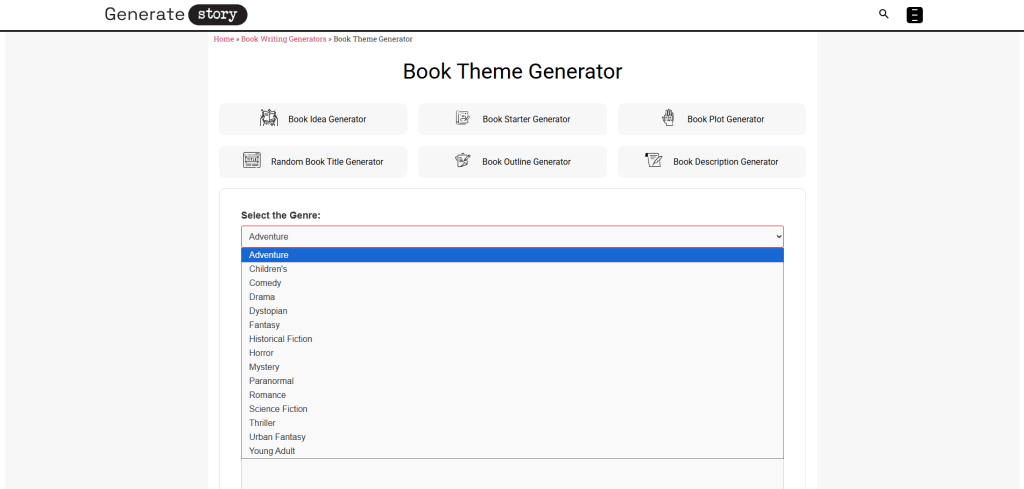
Step 1: Select Your Genre and Tone
Begin by choosing your story’s genre from options like romance, fantasy, or mystery. This tells the generator what kind of story you’re creating. Next, pick a tone that matches the emotional feel you want—whether it’s hopeful, dark, or suspenseful. These two selections work together to shape the thematic direction, much like how choosing a genre for a book idea generator guides the overall creative output.
Step 2: Add Setting Details
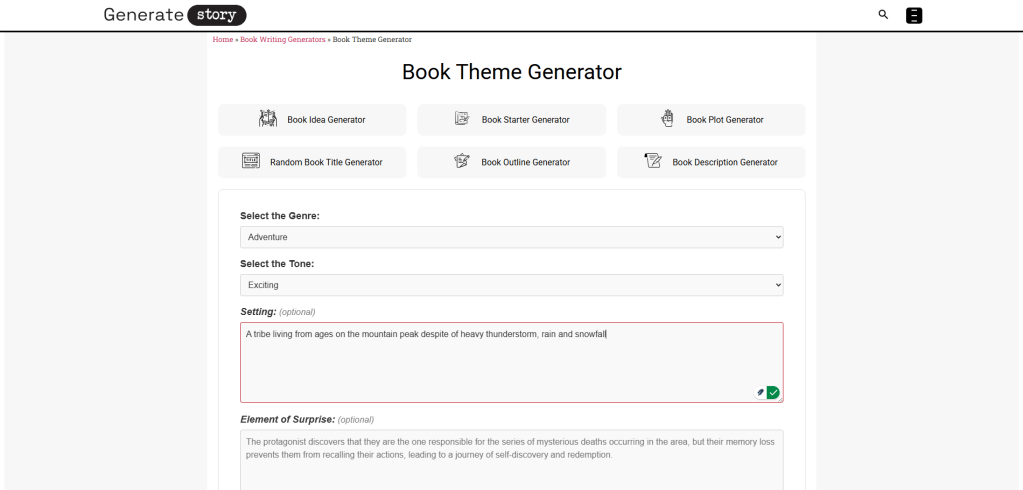
The setting field lets you describe where your story takes place, like a secluded mountain cabin during a snowstorm. This optional detail helps the generator create themes that fit your story’s environment. A well-chosen setting can reinforce your theme through atmosphere and context, adding layers to your narrative beyond the basic plot structure.
Step 3: Include Elements of Surprise
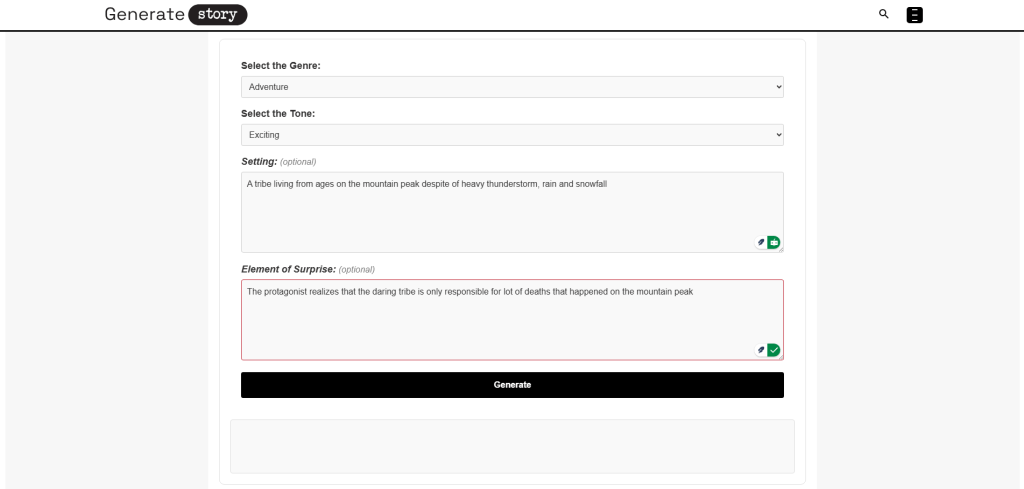
This is where you add unexpected twists or revelations that could define your story’s core conflict. For example, you might describe a protagonist discovering they’re responsible for mysterious events but can’t remember their actions. These surprises often become the engine that drives your theme forward, creating moral dilemmas and character growth opportunities that give depth to your story’s message.
Step 4: Generate and Refine
After entering your details, the generator uses AI to analyze your inputs and suggest themes that capture your story’s heart. You might get themes about redemption, self-discovery, or the consequences of hidden truths. These suggestions aren’t final—they’re starting points you can refine as you develop your plot and characters further, perhaps using a book summary generator to see how the theme plays out across your entire narrative.
The tool’s approach aligns with how theme development techniques work in traditional storytelling, where elements like symbolism and metaphor reinforce the core message. What’s useful is that you can return to the generator as your story evolves, adjusting your inputs based on new character developments or plot twists that emerge during writing.
Why Use GenerateStory’s Book Theme Generator?
Let’s talk about why you would use a book theme generator in your writing process. Having a clear theme isn’t just about giving your story depth—it’s about creating a compass that guides every decision you make, from character development to plot progression. This tool helps you establish that direction early, saving you from extensive revisions later when your story’s core message might conflict with developed characters or plot lines. The value comes from having a solid foundation that keeps your narrative focused and meaningful throughout the writing journey.
Maintains Narrative Focus and Reduces Self-Doubt
When you start with a defined theme, you have a clear reference point for every scene and character decision. This prevents your story from wandering off track or losing its emotional impact. Writers often struggle with self-doubt when their story lacks a central message, constantly questioning whether their narrative has purpose. Having a theme acts as an anchor, providing confidence that your story is building toward something meaningful. This aligns with insights about how themes reduce writer uncertainty and increase satisfaction with the final work.
Creates Emotional Resonance With Readers
Themes connect your story to universal human experiences that readers recognize and care about. Whether exploring love, redemption, or power struggles, these core messages make your story relatable beyond its specific plot points. A theme generator helps you identify which universal concepts work best with your genre and tone, ensuring your story resonates emotionally rather than just entertaining superficially. This emotional connection is what transforms a good story into a memorable one that stays with readers long after they finish reading.
Saves Time During the Revision Process
Starting with a clear theme means you’re less likely to write entire sections that don’t serve your story’s core message. Many writers discover their theme midway through drafting, requiring significant rewrites to align earlier chapters with the emerging message. By using a theme generator at the beginning, you establish that foundational element upfront, making the revision process more about refining than restructuring. This approach is particularly valuable when combined with other planning tools like a book plot generator that helps structure your narrative around the theme.
Enhances Character Development and Conflict
Themes give your characters something to fight for or against, creating natural conflicts that drive your story forward. A theme about redemption, for example, immediately suggests character arcs involving past mistakes and growth opportunities. When you generate themes based on your genre and tone, you’re essentially creating a framework for character motivations and transformations that feel organic to your story’s world. This thematic foundation works well with tools like a story conflict generator to build layered narratives where external struggles reflect internal thematic journeys.
Provides Creative Constraints That Spark Innovation
Paradoxically, having boundaries often fuels creativity rather than limiting it. A defined theme gives you creative constraints that help you make decisions faster and more consistently. Instead of facing infinite possibilities at every turn, you have a filter that tells you which ideas serve your story’s core message and which don’t. This focused approach often leads to more innovative storytelling because you’re working within a framework that challenges you to express universal truths in fresh, genre-specific ways.
Works Across Multiple Story Elements
The generated themes don’t exist in isolation—they influence your setting, symbolism, and even chapter structure. A theme about isolation might lead you to choose specific settings that reinforce that feeling, or incorporate symbolic elements that represent connection and separation. This holistic approach ensures all story elements work together to support the central message, creating a cohesive reading experience. You can even use these themes to inform other aspects of your book development, like creating chapter titles with a book chapter title generator that reflects your thematic progression.
Frequently Asked Questions
What exactly does the Book Theme Generator create?
The Book Theme Generator produces core messages or morals for your story based on your inputs. It analyzes your chosen genre, tone, setting details, and surprise elements to suggest themes like redemption, love, power, or self-discovery. These themes serve as the foundation for building a coherent narrative that resonates with readers.
How does the Book Theme Generator work with AI technology?
The Book Theme Generator uses natural language processing to analyze your inputs and identify patterns that form strong thematic foundations. It draws from literary traditions and common storytelling themes while adapting to your specific creative vision. The AI processes your genre selection, emotional tone, setting description, and surprise elements to generate themes that fit your story's unique parameters.
Can I use the Book Theme Generator for non-fiction writing projects?
The Book Theme Generator is primarily designed for fiction writing, focusing on genres like romance, fantasy, mystery, and science fiction. While some thematic concepts might translate to non-fiction, the tool works best for novels and stories where emotional resonance and moral messages are central to the narrative structure.
How specific should my setting and surprise elements be for best results?
More detailed inputs generally yield more tailored theme suggestions. For settings, describe specific environments like "a decaying space station orbiting a dying star" rather than just "space." For surprise elements, include specific revelations like "the detective discovers the victim was actually their long-lost sibling." The Book Theme Generator uses these details to create themes that integrate seamlessly with your story's unique elements.
Can I use the generated themes for short stories or only full-length novels?
The Book Theme Generator works for both short stories and novels. The themes it produces represent core messages that can be explored at any length. For shorter works, you might focus on a single strong theme, while novels can develop multiple thematic layers. The generator helps establish that foundational message regardless of your project's scope.

A Ph.D. in English Literature from UMass Amherst with over 8 years of academic research experience, Ruth founded GenerateStory.io to bridge traditional story writing with AI-powered storytelling tools. She specializes in helping writers create compelling stories by combining her expertise in literary analysis with innovative technology solutions.
