
Book Plot Generator
Help us improve by giving feedback on the output!
Thank you for your feedback!
And Share it if you loved it!
Share via
Liked the output? Join the AI Enthusiasts WhatsApp Community.
Join NowCrafting a compelling book plot becomes much clearer when you have a creative partner by your side.
The truth is, even the most seasoned writers face moments where the story’s direction feels murky. Sometimes, a fresh twist is just out of reach. This is why a book plot generator can make a real difference. It is here to offer that creative spark when you need it most. It helps you build a strong foundation for your next story.
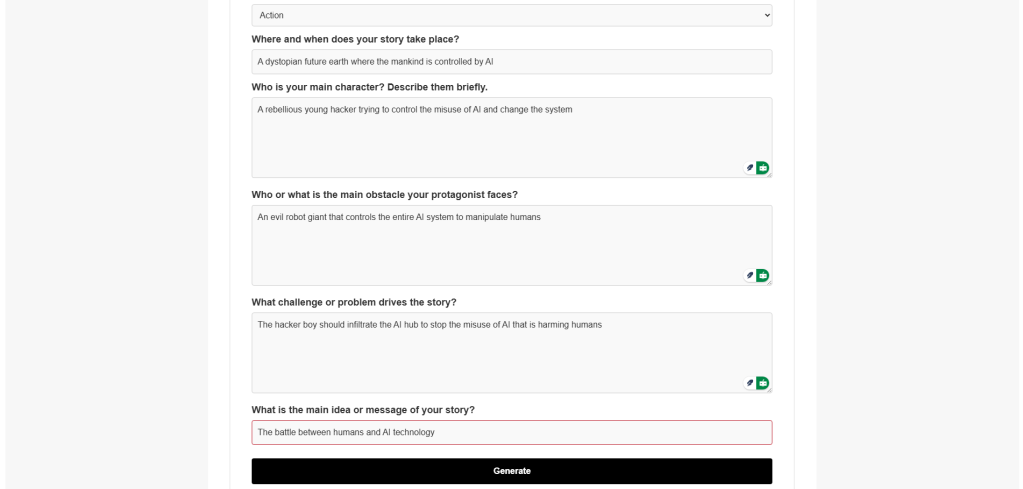
Using this book plot generator is simple and direct. You just provide a few key details, and it helps you outline your story’s core. Here is how you can use it:
- First, you tell the generator what kind of story you want to write. You pick from options such as Fiction, Science Fiction, or Fantasy. Example: Fantasy, Fiction, Narrative, etc.
- Next, you describe the setting and time for your story. Think about where and when things happen. Example: A sprawling city built into a giant tree, centuries after a global magical catastrophe.
- Then, you introduce your main character. A short description helps bring them to life for the generator. Example: A cynical alchemist searching for a lost spellbook
- After that, you define the main challenge or character that stands in your protagonist’s way. This helps shape the conflict. Example: An ancient, powerful dragon guarding the spellbook.
- Then, you state the core problem that drives the story’s action. What must your character achieve? Example: The alchemist must retrieve the spellbook to save their dying village from a spreading blight.
- Finally, you share the central idea or message you want your story to convey. This guides the overall meaning. Example: The power of hope against overwhelming odds.
Once you give these details, this story plot generator will process them. You’ll get a detailed, unique plot idea specifically tailored to your inputs. You might find that even a simple input can spark a whole new direction for your book.
This approach helps you overcome creative blocks and gives you a solid foundation for your writing. Now, let’s look at how this random plot generator technically puts all these pieces together and helps you craft a compelling storyline.
What is a Book Plot Generator?
A book plot generator is an AI-powered tool that creates structured story frameworks for writers. It takes your creative inputs and transforms them into cohesive plot outlines with clear narrative direction. This tool helps you build the foundation for your novel by generating logical story progression and meaningful plot points.
The generator works by analyzing your story elements like genre, setting, characters, and central conflict. It processes these details through advanced natural language models to produce plot structures that follow established storytelling principles. You provide the creative spark, and the AI handles the structural heavy lifting, creating plots that maintain consistency and narrative flow. This approach helps writers who struggle with organizing their ideas into a workable story framework.
Many authors now use these tools as part of their writing process. About 45% of authors incorporate AI assistance in some capacity, particularly for plot development. The generator can work alongside other writing tools like a book outline generator or plot idea generator, to create comprehensive story foundations. It adapts to various genres while maintaining the core elements that make stories compelling and coherent.
How to Create a Book Plot Using GenerateStory’s Book Plot Generator?
Using a book plot generator is straightforward once you understand how it processes your creative inputs. You provide specific details about your story, and the AI analyzes these elements to build a coherent narrative structure. The tool follows a logical progression from your initial concepts to a fully developed plot framework.
Step 1: Starting with Your Story Type
You begin by selecting your story genre from the dropdown menu. This choice sets the foundation for your plot’s tone and conventions. Whether you choose fantasy, mystery, or science fiction, the generator uses this selection to apply appropriate genre-specific storytelling patterns. The AI recognizes that different genres require distinct plot structures and narrative approaches.

Step 2: Establishing Your Setting
Next, you describe where and when your story takes place. This context helps the AI create a plot that integrates naturally with your world. The generator uses your setting details to ensure plot events make sense within your established environment. A dystopian future will generate different plot points than a historical romance setting.
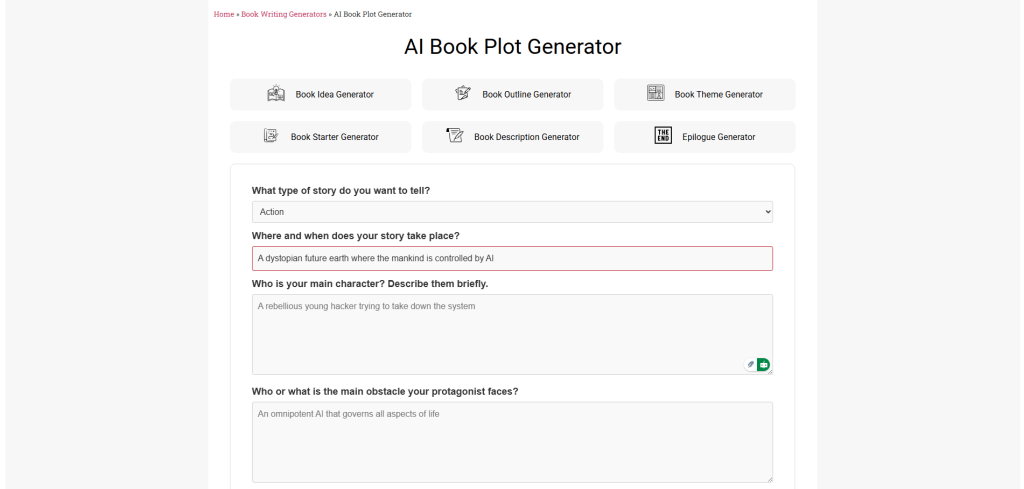
Step 3: Defining Your Main Character
You provide a brief description of your protagonist, which the AI uses to shape plot developments that align with their personality and motivations. The generator ensures your character’s actions and growth remain consistent throughout the plot. This character-focused approach helps create a believable story progression that serves both plot and character development.
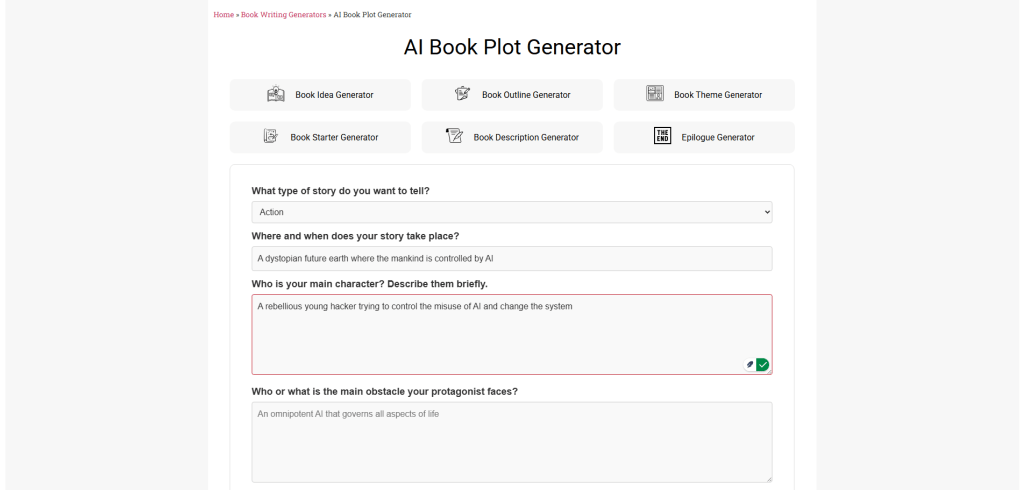
Step 4: Identifying the Central Conflict
You specify the main obstacle your protagonist faces, which becomes the driving force of your plot. The AI uses this information to build tension and create meaningful challenges. This conflict serves as the engine that propels your story forward, with the generator structuring events that test your character and advance the narrative.
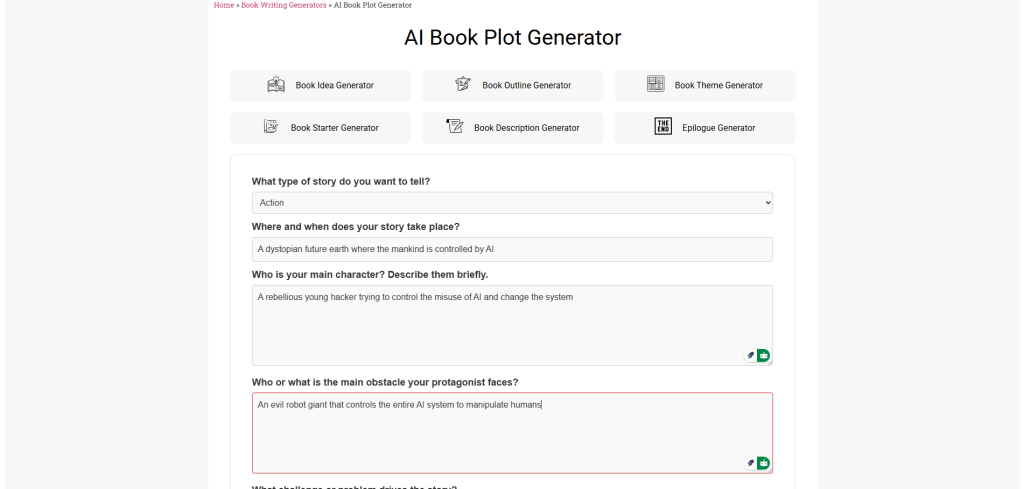
Step 5: Setting the Core Challenge
You define the specific problem that drives your story, giving the AI clear direction for plot development. This challenge becomes the central thread that connects all plot points. The generator creates logical progression from initial problem to resolution, ensuring each event contributes to solving or complicating the core challenge.
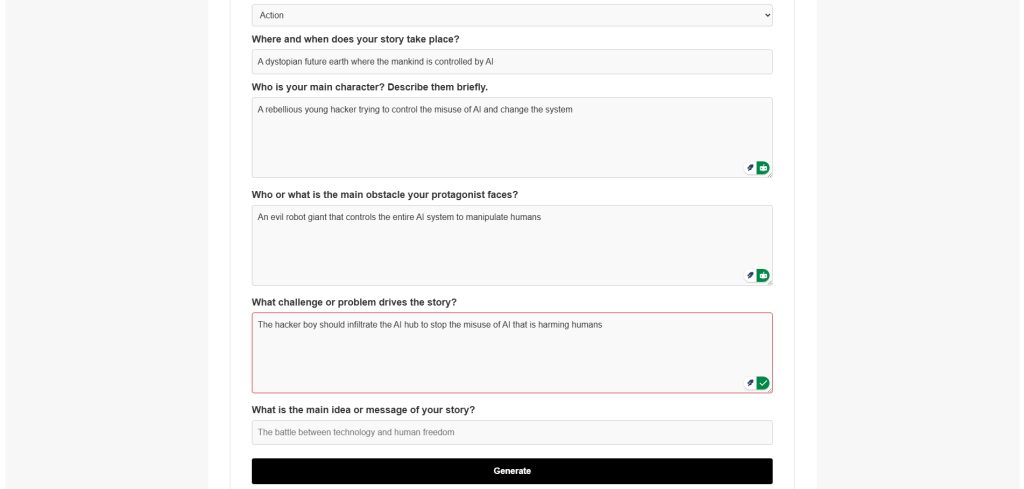
Step 6: Establishing Your Theme
Finally, you articulate the main idea or message of your story. The AI uses this thematic guidance to ensure plot developments reinforce your intended meaning. This helps create a cohesive narrative where events, character actions, and resolutions all support your central theme, much like working with a story theme generator would structure your narrative around core ideas.
Why Use GenerateStory’s Book Plot Generator?
Let’s talk about why you would use a book plot generator in your writing process. These tools have become essential for many writers because they solve specific creative challenges while keeping your unique voice intact. The generator doesn’t replace your creativity—it enhances it by providing structure and direction when you need it most.
You might be surprised to learn that nearly half of authors now use AI tools for various aspects of their writing. This widespread adoption speaks to the practical benefits these tools offer, especially when you’re dealing with complex narrative structures or fighting through creative blocks.
Overcoming Writer’s Block
Every writer faces moments when the ideas just won’t flow. A book plot generator gives you that initial push to get moving again. Instead of staring at a blank page, you get a structured framework that you can build upon. The tool takes your basic concepts and transforms them into actionable plot points, helping you break through creative stagnation.
Saving Time on Structural Planning
Plotting a novel can consume weeks of preparation time. The generator handles the heavy lifting of story structure, allowing you to focus on character development and prose. You provide the creative elements, and the AI organizes them into a coherent narrative flow. This efficiency is particularly valuable when you’re working with complex genres that require intricate plotting.
Exploring New Genres and Styles
If you typically write in one genre but want to experiment with another, the plot generator provides genre-appropriate story structures. A mystery novel follows different conventions than a fantasy epic, and the AI understands these distinctions. This helps you maintain genre authenticity while exploring new creative territory without getting lost in unfamiliar storytelling patterns.
Maintaining Narrative Consistency
One of the biggest challenges in novel writing is keeping your plot logically consistent across hundreds of pages. The generator ensures your story events follow a natural progression and remain true to your established world and characters. This consistency is crucial for reader engagement and professional-quality storytelling.
Collaborating with AI as a Creative Partner
The generator acts as a brainstorming partner that never runs out of ideas. You can generate multiple plot variations based on the same core elements, then choose the direction that best serves your story. This collaborative approach helps you explore narrative possibilities you might not have considered on your own.
Integrating with Other Writing Tools
The plot generator works seamlessly with other writing aids to create a comprehensive toolkit. You can combine it with a book outline generator for detailed chapter planning or use it alongside a character name generator to develop your cast. This integrated approach streamlines your entire writing process from concept to completion.
Many writers find that using AI tools actually enhances their creative control rather than diminishing it. As discussed in industry analyses, these tools provide support while still leaving the final creative decisions in your hands. The generator gives you options and structure, but you remain the author, making all the important storytelling choices.
Frequently Asked Questions
How does the Book Plot Generator create unique plots from my inputs?
The Book Plot Generator analyzes your specific inputs through advanced natural language processing. It examines your genre choice, character details, setting, and conflict to generate plot structures that follow established storytelling patterns. The AI combines your creative elements with narrative conventions to produce coherent plot outlines tailored to your story's specific requirements.
Can I use the Book Plot Generator for non-fiction or memoir writing?
The Book Plot Generator primarily focuses on fiction genres, but it does include non-fiction and self-help options. For memoir or biographical projects, you might find better results by treating them as narrative non-fiction. The generator can help structure true stories with compelling narrative arcs, though its strength remains in fictional plot development.
What if I don't like the plot the generator creates?
You can regenerate new plots as many times as needed with the same inputs. The Book Plot Generator produces different narrative structures each time, giving you multiple options to choose from. You can also modify your original inputs slightly to steer the AI toward different plot directions while maintaining your core story elements.
Does the Book Plot Generator work with complex multi-character stories?
The Book Plot Generator focuses primarily on your main character and central conflict, but it can accommodate supporting characters through your descriptions. For stories with multiple protagonists, you might need to run the generator separately for different character perspectives, then combine the results manually to create a cohesive multi-thread narrative.
How detailed are the plot outlines generated by this tool?
The Book Plot Generator provides structural frameworks rather than extremely detailed scene-by-scene outlines. You receive a plot skeleton with major story beats, turning points, and narrative progression. This gives you enough direction to start writing while leaving room for creative development. For more detailed planning, you can combine it with a book outline generator for chapter-level organization.

A Ph.D. in English Literature from UMass Amherst with over 8 years of academic research experience, Ruth founded GenerateStory.io to bridge traditional story writing with AI-powered storytelling tools. She specializes in helping writers create compelling stories by combining her expertise in literary analysis with innovative technology solutions.
