
Character Motivation Generator
Help us improve by giving feedback on the output!
Thank you for your feedback!
And Share it if you loved it!
Share via
Liked the output? Join the AI Enthusiasts WhatsApp Community.
Join NowHere’s a straightforward guide on how to use the Character Motivation Generator effectively:
- Character Name: Start by entering your character’s name, such as “Elara.” This will make your character feel more personalized.
- Character Role: Specify the role this character plays in the story. For example, you might say “Protagonist.” This helps set the context for their motivations.
- Main Personality Traits: List the main traits that define your character. For instance, “Brave, loyal, quick-tempered” will give your character depth.
- Major Life Experience: Describe a significant life event that has shaped them. Think along the lines of “Betrayal by a close friend,” which can influence their actions and decisions.
- Main Goal: State their current primary aim or desire. For example, “To prove her worth to her community” gives a clear direction for their actions.
- Conflict or Fear: Identify a conflict or fear they struggle with, such as “Fear of failure and disappointing her family.” This adds layers to their character and sets up potential story arcs.
Once you have filled out these fields, the generator will process your inputs and provide you with rich character motivation ideas. You can expect thought-provoking prompts that can inspire your character’s journey, leading to more engaging storytelling.
Let’s get into what this generator is and how it works technically. It uses AI to analyze the information you provide and generate detailed motivations that align with common narrative themes and structures.
Contents
ToggleWhat is a Character Motivation Generator?
A character motivation generator is an AI-powered tool that helps writers create compelling reasons for their characters’ actions and decisions. It takes details about your character’s personality, backstory, and current situation to generate believable motivations that drive your narrative forward.
The generator works by analyzing the specific traits and experiences you provide, such as personality characteristics and major life events. It processes these inputs through specialized AI models trained on narrative psychology and storytelling patterns. This approach helps create motivations that feel authentic to each character’s unique circumstances, whether you’re working with a protagonist or supporting character.
What makes this tool valuable is its ability to connect character psychology to plot development. Research shows that readers engage more deeply with characters whose motivations feel real and consistent. The generator helps maintain this consistency, which is particularly useful when you’re also using tools like our character personality generator or developing multiple characters with our AI story character generator.
How to Create Character Motivation Using Generatestory’s Character Motivation Generator?
Using the character motivation generator is straightforward once you understand how each input field contributes to the final result. The tool requires six specific pieces of information about your character, each serving a distinct purpose in crafting believable motivations. You’ll provide details ranging from basic identity to deeper psychological elements that shape decision-making.
Starting with Character Basics
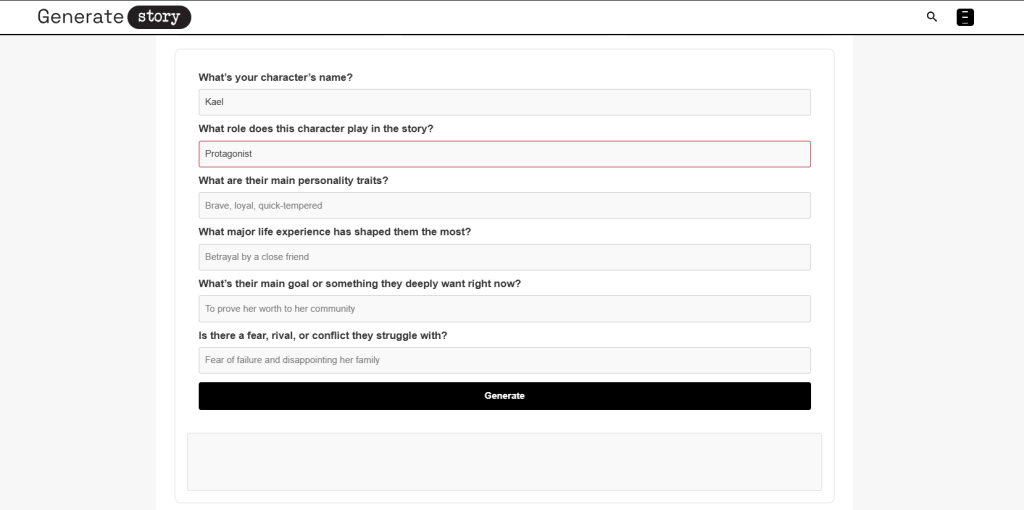
Begin with the character’s name and role, as these establish fundamental context. The name personalizes the output, while the role (protagonist, antagonist, supporting character) determines the narrative function. These basic identifiers help the AI understand the character’s position in your story structure before diving into deeper motivational factors.
Defining Personality and Background
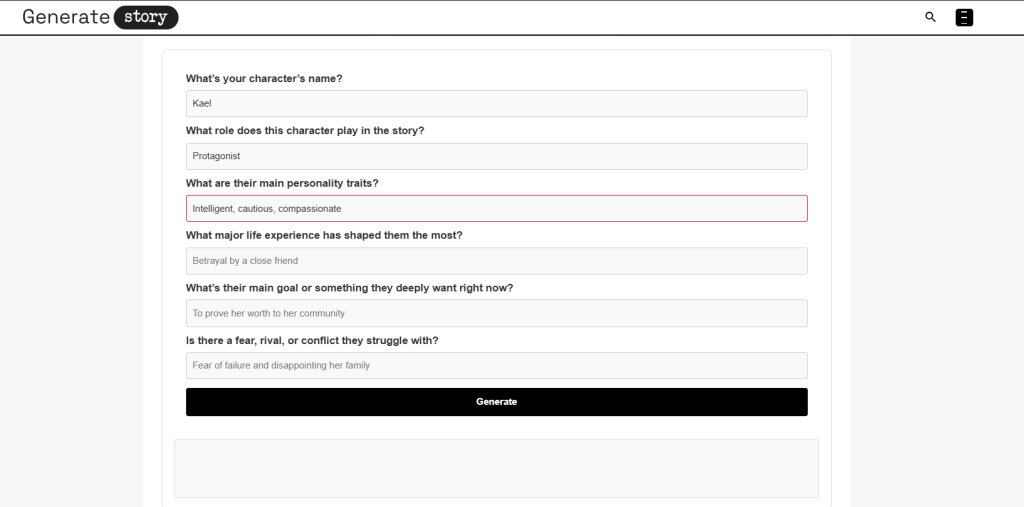
Next, describe the character’s main personality traits and most significant life experience. The personality traits (like brave, loyal, or quick-tempered) indicate how the character typically responds to situations. The major life experience provides crucial backstory context – research shows that characters’ past experiences significantly influence their current motivations and audience engagement. This combination helps the AI model psychological consistency.
Establishing Goals and Conflicts
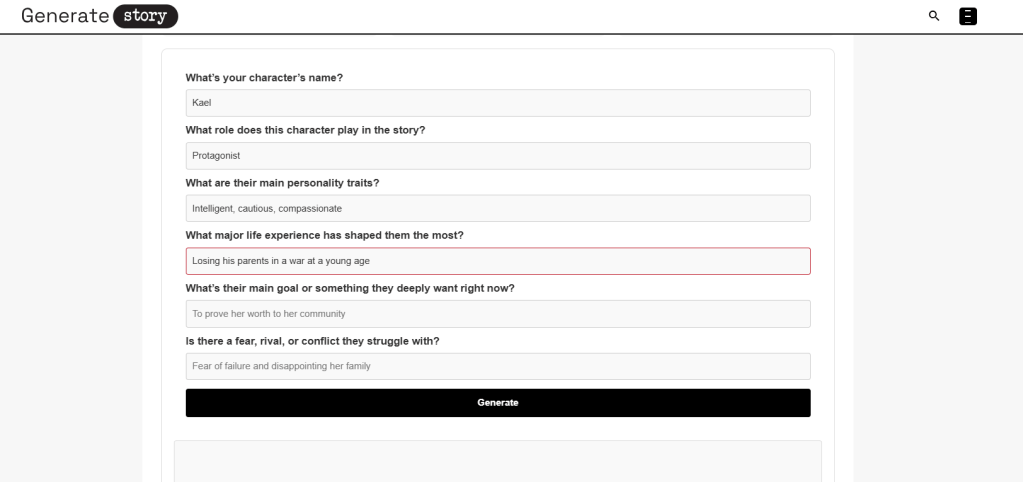
The final two fields address the character’s current desires and obstacles. The goal represents what they actively pursue, while the fear or conflict represents what holds them back. This tension between aspiration and limitation creates dynamic motivation that drives plot development. The generator analyzes how these elements interact with the personality and backstory you’ve provided.
Processing and Output Generation
After submitting all six fields, the AI processes your inputs through specialized narrative models. It cross-references your character details with established motivational frameworks, including common drivers like survival, relationships, and personal growth identified by writing experts. The system generates multiple motivation options that align with your character’s specific circumstances and role in the story.
Refining and Applying Results
The tool produces motivation statements that you can directly incorporate into your writing or use as brainstorming prompts. These outputs maintain consistency with character details while suggesting fresh motivational angles you might not have considered. For characters needing additional development, you can combine these motivations with outputs from our character flaws generator to create more complex, believable personalities.
Why Use Generatestory’s Character Motivation Generator?
Let’s talk about why character motivation matters in your writing and how this tool addresses specific challenges writers face. Motivation isn’t just about why characters do things—it’s the engine that drives your entire story forward. When motivations feel authentic, readers connect more deeply with your characters and become invested in their journeys. This connection is what transforms a good story into a memorable one that keeps readers turning pages.
Creates Psychological Consistency
The generator ensures your character’s actions align with their established personality and background. If you’ve created a character who’s fundamentally honest but needs to lie for the story to progress, the tool helps develop motivations that make this contradiction believable. It bridges the gap between character traits and plot requirements, maintaining internal logic that readers instinctively recognize and appreciate.
Solves Writer’s Block on Character Decisions
Every writer hits points where they’re not sure what a character would do next. The generator provides multiple motivation options based on the specific details you provide, giving you fresh perspectives when you’re stuck. Instead of staring at a blank page wondering why your protagonist would take that risk or make that choice, you get concrete motivational statements that fit your character’s established psychology.
Builds Deeper Reader Engagement
Research shows that readers empathize more with characters whose motivations feel authentic and consistent. The generator helps create this authenticity by connecting personality traits, past experiences, and current goals into cohesive motivational drivers. This emotional connection keeps readers invested in your story and caring about what happens to your characters.
Maintains Series Consistency
For writers working on series or multiple books featuring the same characters, maintaining consistent motivations becomes challenging over time. The generator serves as a reference tool that remembers the core motivational drivers you’ve established. You can return to it when writing subsequent installments to ensure character decisions remain true to their original psychological makeup, avoiding continuity errors that might disappoint loyal readers.
Works With Other Character Development Tools
The motivation generator integrates seamlessly with other character creation tools. If you’ve used a character personality generator to establish core traits, you can feed those results directly into the motivation tool. Similarly, motivations generated here can inform choices when using a character flaws generator to create more nuanced, believable characters with both strengths and weaknesses.
Saves Development Time
Developing complex character motivations manually can take hours of brainstorming and psychological mapping. The generator produces multiple options in seconds, giving you a solid foundation to build upon rather than starting from scratch. This efficiency is particularly valuable when you’re developing supporting characters who need believable motivations but don’t require the same depth of development as your main characters.
Provides Educational Value
Beyond immediate practical use, the generator teaches you about motivational patterns and psychological consistency in character development. By seeing how different inputs produce different motivational outputs, you learn what makes motivations feel authentic to readers. This understanding improves your overall character development skills, making you better at creating compelling characters even when you’re not using the tool.
Frequently Asked Questions
How does the Character Motivation Generator create unique motivations for each character?
The Character Motivation Generator analyzes all six input fields simultaneously, finding connections between personality traits, backstory, goals, and conflicts. It processes these through AI models trained on narrative psychology, ensuring each motivation output specifically matches your character's unique combination of traits and circumstances. The system avoids generic responses by weighting the most distinctive elements you provide, like unusual life experiences or specific fears.
Can the Character Motivation Generator help with antagonist motivations as well as protagonists?
Yes, the Character Motivation Generator works for all character roles including antagonists, supporting characters, and minor roles. When you specify "antagonist" as the character's role, the AI adjusts its motivational framework to create compelling reasons for oppositional behavior. It develops motivations that make antagonists feel like real people with believable reasons for their actions, rather than simply evil for the sake of conflict.
What if I don't know all the details about my character's backstory or personality?
The Character Motivation Generator requires all six fields for optimal results, but you can use placeholder information if some details aren't fully developed. For incomplete characters, consider using a character personality generator first to establish core traits, then refine the motivations later as your character develops. The tool works best with specific inputs, but even partial information can yield useful starting points.
How many motivation options does the generator typically provide?
The Character Motivation Generator usually provides 3-5 distinct motivation options based on your inputs. Each option represents a different psychological angle or priority focus, giving you variety while maintaining consistency with your character's established traits. You might receive one motivation centered on emotional needs, another on practical goals, and a third on relationship dynamics, all stemming from the same character foundation.
Can I use the generated motivations for commercial writing projects?
Yes, motivations generated by the Character Motivation Generator are yours to use in commercial projects, personal writing, or any creative work. The tool serves as an idea generator and brainstorming aid, similar to using writing prompts or creative exercises. The specific application and execution of these motivations in your actual writing remains your original creative work.

A Ph.D. in English Literature from UMass Amherst with over 8 years of academic research experience, Ruth founded GenerateStory.io to bridge traditional story writing with AI-powered storytelling tools. She specializes in helping writers create compelling stories by combining her expertise in literary analysis with innovative technology solutions.
