
Fantasy Plot Generator
Help us improve by giving feedback on the output!
Thank you for your feedback!
And Share it if you loved it!
Share via
Liked the output? Join the AI Enthusiasts WhatsApp Community.
Join NowCrafting gripping fantasy stories has never been easier. With the Fantasy Plot Generator, you can breathe life into the imaginative realms of your mind with just a few inputs.
Using this generator is straightforward. Here’s how you can create your own unique fantasy plot step by step:
- Select a Subgenre: Start by choosing a subgenre that aligns with your vision for the story. Options include High Fantasy, Urban Fantasy, Dark Fantasy, or even Fairy Tale Retelling.
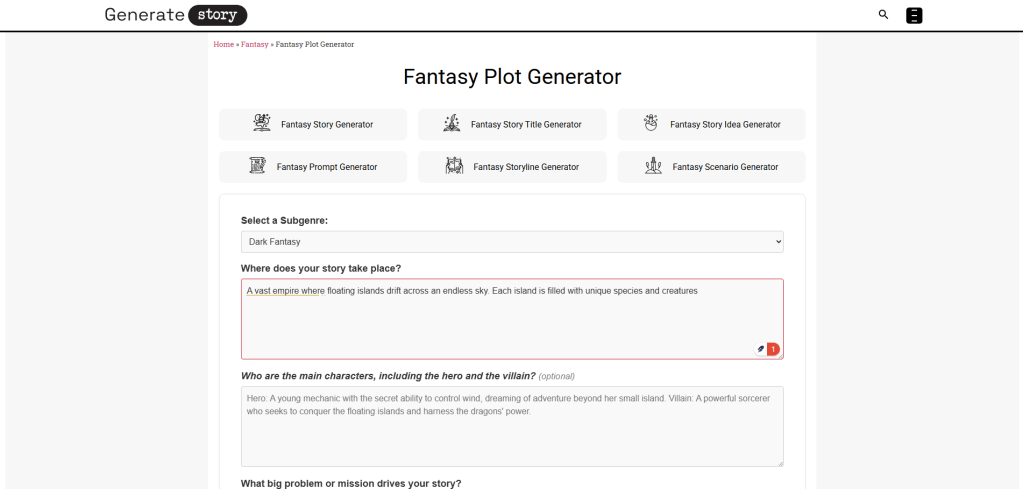
- Where does your story take place? Provide a brief description of the setting. For example, you might write about “A vast empire where floating islands drift across an endless sky, each island home to unique civilizations and guarded by ancient dragons.”
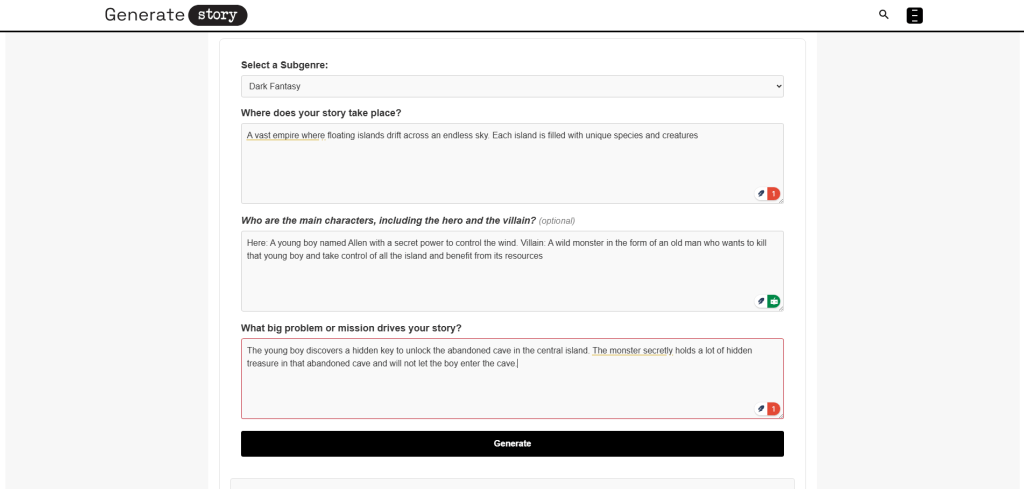
- Who are the main characters? Here, you can describe your hero and villain. For instance, you could say, “Hero: A young mechanic with the secret ability to control wind, dreaming of adventure beyond her small island. Villain: A powerful sorcerer who seeks to conquer the floating islands and harness the dragons’ power.” Feel free to add any supporting characters to enrich your story.
- What big problem or mission drives your story? Highlight the central conflict. For example, “The hero discovers a map to a legendary island believed to hold the key to defeating the sorcerer and uniting the sky realms. She must assemble a crew of misfits, outsmart the sorcerer’s minions, and embark on a perilous journey through the skies.”
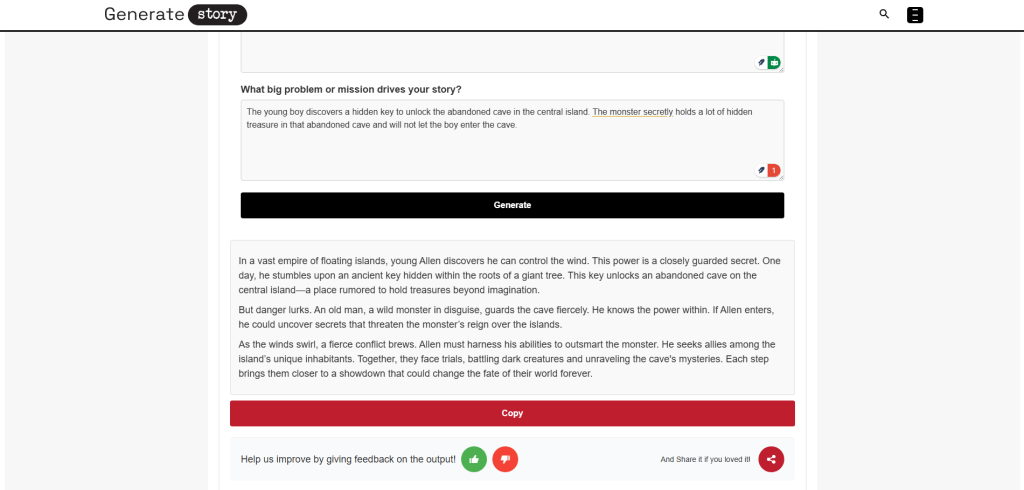
Once you’ve filled in these fields and hit generate, the tool develops compelling fantasy plots involving quests, betrayals, or magical conflicts that serve as a foundation for novels or campaigns. What you receive can inspire plots rich in adventure and intrigue.
Let’s get into what makes this generator a valuable resource in your storytelling journey and how it effectively weaves together the fantasy elements you create.
Contents
ToggleWhat is a Fantasy Plot Generator?
A fantasy plot generator is an AI-powered tool that creates structured narrative foundations for fantasy stories. It builds complete plot outlines involving quests, betrayals, and magical conflicts that serve as starting points for novels or campaigns. This type of story generator for creative writing helps you develop coherent fantasy narratives with proper story arcs and compelling conflicts.
The generator works by analyzing your chosen subgenre, story setting, character details, and central conflict to produce customized plot structures. It draws from classical storytelling frameworks like the hero’s journey and other fantasy plot structures to ensure your generated plot follows proven narrative patterns. You can combine it with a character generator for deeper character development or use a fantasy story idea generator for additional inspiration.
This approach helps overcome common fantasy writing challenges like maintaining pacing and developing coherent story arcs. The generator’s AI understands fantasy genre conventions and creates plots that fit within established narrative frameworks while allowing room for your creative input and unique storytelling style.
How to Create a Fantasy Plot Using GenerateStory’s Fantasy Plot Generator?
Using a fantasy plot generator involves providing specific inputs that guide the AI in creating your custom narrative structure. You start by selecting your subgenre from options like high fantasy or urban fantasy, which sets the tone and conventions for your story. Then you describe your story’s setting, characters, and central conflict to give the generator the essential elements it needs to build your plot.
Step 1: Choosing Your Fantasy Subgenre
The subgenre selection is your first and most important choice. Each fantasy subgenre comes with its own established conventions and expectations. High fantasy typically involves epic quests in entirely fictional worlds, while urban fantasy blends magical elements with contemporary settings. Your choice here determines the fundamental rules and atmosphere of your generated plot, influencing everything from character types to conflict resolution methods.

Step 2: Describing Your Story Setting
Your setting description provides the physical and cultural context for your plot. This isn’t just about geography—it’s about creating a living world where your story can unfold. Describe unique elements like floating islands in the sky or ancient magical forests, including how these environments affect daily life and conflict. The generator uses this information to create plot points that are deeply connected to your world’s specific characteristics and limitations.
Step 3: Defining Main Characters
Character details shape the personal stakes and relationships within your plot. When describing your hero and villain, focus on their motivations, abilities, and personal histories. The generator analyzes these character profiles to create conflicts that test their strengths and exploit their weaknesses. This ensures your plot isn’t just a series of events but a meaningful journey that challenges and transforms your characters throughout the story.

Step 4: Establishing the Central Conflict
Your central conflict description drives the entire plot structure. This is where you define the main problem, mission, or threat that propels your story forward. The generator takes this conflict and builds rising action, climax, and resolution around it, ensuring each plot point serves the central narrative. This approach helps maintain focus and momentum throughout your generated plot outline.
Step 5: Understanding the Generation Process
The AI processes your inputs through multiple layers of analysis. It first identifies genre patterns and narrative structures appropriate for your chosen subgenre. Then it maps your specific elements—setting, characters, and conflict—onto these structures to create a customized plot. The system references established fantasy narrative frameworks while incorporating your unique details to ensure both originality and structural soundness in the final output.
Step 6: Working with Generated Plots
The generated plot serves as a flexible foundation rather than a rigid blueprint. You receive a structured outline with key plot points, conflicts, and turning points that follow logical progression. This outline maintains consistency with fantasy storytelling conventions while leaving room for your creative expansion. You can modify any element, add subplots, or combine it with generated content from other tools like a plot twist generator for additional complexity.
Step 7:Refining and Customizing Results
After generating your initial plot, you can refine it through additional inputs or manual adjustments. The generator allows you to emphasize certain elements, adjust pacing, or focus on specific aspects like character development or world-building. This iterative process helps you shape the plot to better match your vision while maintaining the structural integrity provided by the AI’s narrative analysis capabilities.
Why Use GenerateStory’s Fantasy Plot Generator?
Let’s talk about why a fantasy plot generator matters for your writing process. You might have great characters and an amazing world, but without a strong plot structure, your story can feel directionless or lose momentum halfway through. This is where a dedicated plot generator becomes invaluable—it provides the narrative backbone that transforms your ideas into compelling stories with proper pacing and satisfying arcs.
Overcoming Structural Challenges
Fantasy writing presents unique structural challenges that can trip up even experienced writers. You need to balance world-building with plot progression, maintain consistency with magical systems, and ensure your story follows recognizable narrative patterns that readers expect. The generator handles these structural elements by applying proven frameworks like the hero’s journey and other classical storytelling patterns. This approach helps you avoid common pitfalls like meandering subplots or unsatisfying resolutions that often plague fantasy manuscripts.
Saving Time on Plot Development
Developing a complete plot structure from scratch can take weeks of planning and outlining. The generator compresses this process into minutes by analyzing your inputs and producing a coherent narrative structure. This time savings allows you to focus your energy on actual writing and character development rather than getting stuck in the planning phase. You can always modify the generated plot to better suit your vision, but having that initial framework eliminates the blank page anxiety that stops many projects before they begin.
Ensuring Genre Appropriateness
Different fantasy subgenres have different conventions and reader expectations. A dark fantasy plot needs different elements than a fairy tale retelling, and the generator understands these distinctions. By selecting your subgenre first, you ensure the generated plot follows appropriate tropes and patterns while still allowing for originality. This genre awareness is particularly valuable if you’re experimenting with a new subgenre or want to ensure your story fits market expectations while maintaining creative freedom.
Creating Cohesive Story Elements
The generator doesn’t just create random plot points—it weaves your specific characters, setting, and conflict into a unified narrative. If your hero has wind control abilities, the plot will incorporate opportunities to use this power meaningfully. If your setting involves floating islands, the plot will leverage this unique environment for key scenes and conflicts. This integration ensures all story elements work together rather than feeling disconnected, which is crucial for maintaining reader immersion in fantasy worlds.
Generating Fresh Ideas and Combinations
Even when you start with familiar elements, the generator can produce unexpected plot combinations that spark new creative directions. The AI analyzes thousands of successful fantasy narratives to identify patterns and possibilities you might not consider on your own. This can lead to unique story developments that feel both original and structurally sound. For additional inspiration beyond plot structure, you might explore a fantasy scenario generator to develop specific scenes or situations within your generated plot framework.
Supporting Series and Campaign Planning
Fantasy stories often span multiple books or game campaigns, requiring careful long-term plot planning. The generator can create plot structures that allow for expansion and continuation, with natural breaking points and unresolved elements that set up future installments. This is particularly useful for writers planning trilogies or game masters designing extended campaigns where consistent plotting across multiple story arcs is essential for maintaining audience engagement over time.
Meeting Market Demand
The fantasy genre continues to grow in popularity, with increasing reader interest creating more opportunities for writers. Having a well-structured plot becomes even more important when trying to stand out in a competitive market. The generator helps you create professional-level plot structures that meet reader expectations while still allowing your unique voice and ideas to shine through the narrative framework it provides.
Frequently Asked Questions
How does the Fantasy Plot Generator create original plots?
The Fantasy Plot Generator analyzes your specific inputs—subgenre, setting, characters, and conflict—against established narrative patterns and fantasy conventions. It combines these elements in unique ways that maintain structural integrity while producing fresh plot combinations. The AI references thousands of successful fantasy stories to ensure originality within genre-appropriate frameworks.
Can I use the generated plots for commercial projects?
Yes, plots generated by the Fantasy Plot Generator are yours to use for any purpose, including commercial novels, games, or other creative projects. The tool serves as an idea generator and structural aid, but the final creative implementation and ownership belong to you as the user.
What if I don't like the plot structure it generates?
The Fantasy Plot Generator provides a flexible foundation that you can modify extensively. You can adjust any element, regenerate with different inputs, or combine multiple generated plots. Many writers use the initial output as a starting point and then customize it to better match their specific vision and storytelling style.
How detailed are the generated plot outlines?
The Fantasy Plot Generator creates comprehensive plot structures with key turning points, conflicts, and narrative progression. You'll receive a complete story arc including setup, rising action, climax, and resolution, all tailored to your specific inputs. The detail level is sufficient to start writing immediately while leaving room for your creative expansion.
Does it work for short stories and novellas, or only novels?
The Fantasy Plot Generator adapts to different story lengths based on your input complexity. For shorter works, provide more focused conflicts and fewer characters. The AI adjusts the plot scope and complexity accordingly, making it suitable for everything from short stories to multi-book series planning.

A Ph.D. in English Literature from UMass Amherst with over 8 years of academic research experience, Ruth founded GenerateStory.io to bridge traditional story writing with AI-powered storytelling tools. She specializes in helping writers create compelling stories by combining her expertise in literary analysis with innovative technology solutions.
