
Fantasy Storyline Generator
Help us improve by giving feedback on the output!
Thank you for your feedback!
And Share it if you loved it!
Share via
Liked the output? Join the AI Enthusiasts WhatsApp Community.
Join NowCreating your next epic adventure becomes simpler with the Fantasy Storyline Generator. This tool is designed to help you craft engaging and intricate storylines for your fantasy tales. Whether you are writing for a novel or developing a campaign for an RPG, this generator can be your trusted ally in bringing your whimsical worlds to life.
Getting started is straightforward. Follow these steps to create your unique fantasy storyline:
- Choose the type of fantasy story: You will need to select the genre of your tale. Options include Epic/High Fantasy, Urban Fantasy, Dark Fantasy, and more.
- Define your main character: Enter a brief description of who your protagonist is, such as “A brave farm boy named Aric with the hidden power to control the winds.”
- Identify the villain: If you want, you can provide details about the antagonist. For example, “Queen Morlath, a sorceress who wants to shroud the world in eternal darkness.”
- Set the location: Here, you can describe where your story unfolds, like “The enchanted kingdom of Eldoria, filled with floating islands and ancient ruins.”
- Outline the main conflict or mission: Specify the primary struggle your hero faces, such as “Aric must find the lost Crown of Storms to prevent Morlath from completing her dark ritual.”
- Choose the mood: Finally, decide on the feeling you want your story to convey. Options can range from Adventurous to Dark and eerie.
After providing this information, the Fantasy Storyline Generator compiles a cohesive, multi-chapter storyline for you. Expect a detailed narrative plan that includes key events and character arcs, perfect to serve as a foundation for writing a novel or crafting a thrilling RPG campaign.
Let’s get into what makes this generator a robust tool for anyone looking to create fantasy stories.
Contents
ToggleWhat is a Fantasy Storyline Generator?
A fantasy storyline generator is an AI-powered tool that builds cohesive, multi-chapter narratives for fantasy novels or RPG campaigns. It takes your story elements and transforms them into structured plot progressions with key events and character development arcs.
The generator works by analyzing your chosen fantasy subgenre, main character details, antagonist, setting, and central conflict to create a narrative framework. It applies established story structures to ensure your storyline has proper pacing and progression. This approach helps maintain consistency while allowing for creative flexibility within your fantasy world.
You can use it alongside other tools like a fantasy plot generator for more detailed scene development or combine it with an AI character generator for deeper character arcs. The generator adapts to various fantasy styles, from epic high fantasy to urban fantasy, ensuring your storyline matches both your creative vision and reader expectations for the genre.
How to Create a Fantasy Storyline Using GenerateStory’s Fantasy Storyline Generator?
Using the fantasy storyline generator is straightforward once you understand how each input field contributes to your final narrative. The tool processes your specific details through AI algorithms trained on fantasy storytelling patterns and structures. You provide the creative elements, and it builds the framework that connects them into a cohesive multi-chapter storyline.
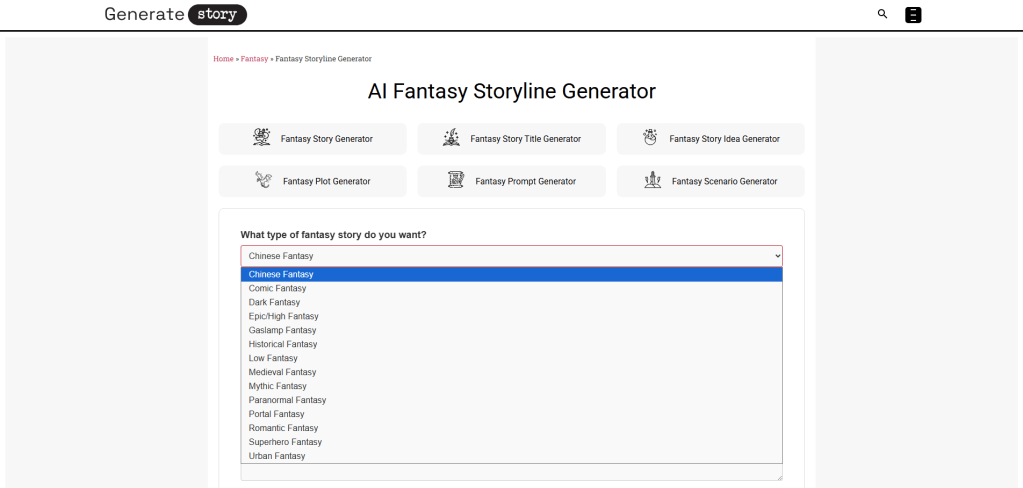
Step 1: Selecting Your Fantasy Subgenre
Start by choosing your fantasy type from the dropdown menu. This selection sets the foundational rules and expectations for your story world. The generator uses this to determine appropriate tropes, magic systems, and societal structures. For example, selecting “Historical Fantasy” tells the AI to incorporate real historical elements with fantasy twists, drawing from established patterns in historical fantasy narratives that blend factual settings with magical elements.
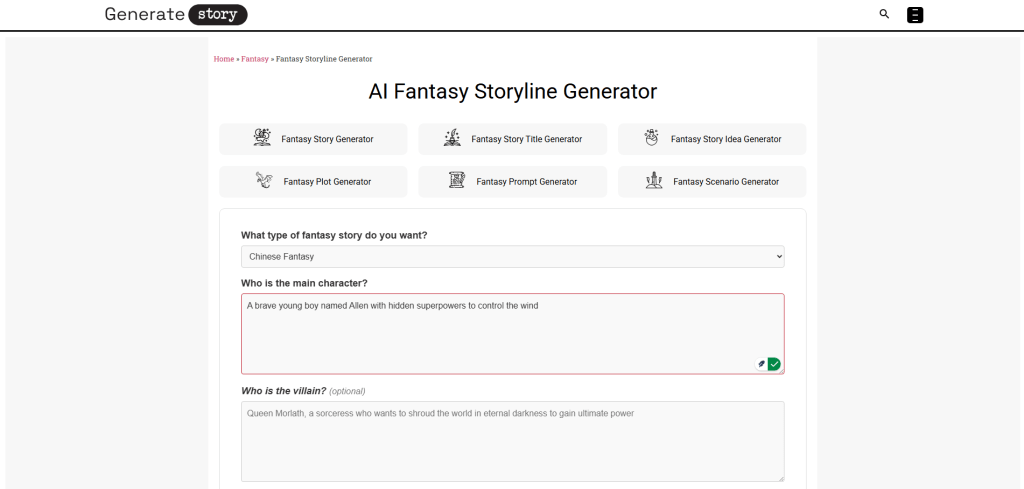
Step 2: Defining Your Main Character
Describe your protagonist in the text field with specific details about their abilities, background, and personality. The AI analyzes these traits to create appropriate character development arcs that align with your chosen story structure. This works particularly well when combined with dedicated character development tools that provide deeper personality profiling.
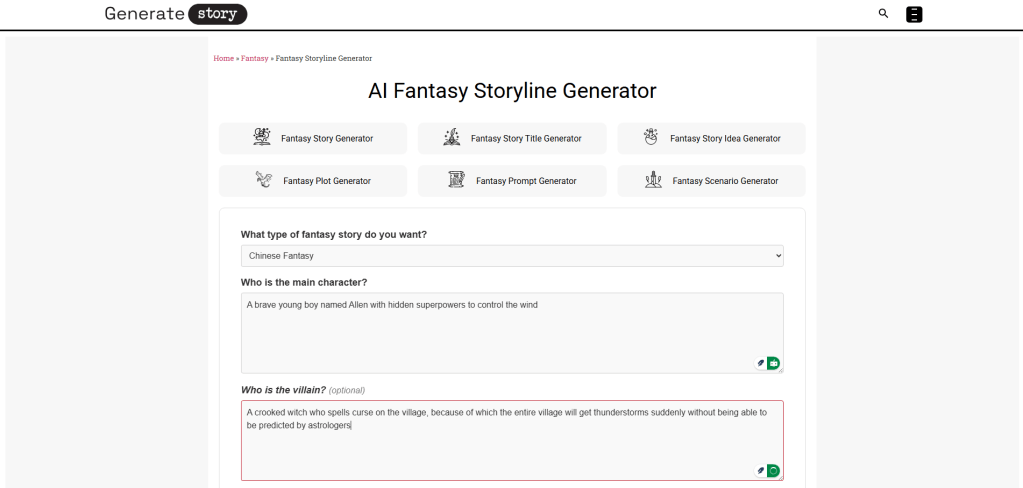
Step 3: Establishing Antagonists and Conflict
While the villain field is optional, providing antagonist details helps the generator create more nuanced opposition and meaningful confrontations. The main conflict field is essential—it gives the AI the central problem that drives your entire storyline forward. This conflict becomes the backbone of your narrative progression, following classic three-act structure principles that ensure proper rising action and resolution pacing.
Step 4: Building Your Story World
The setting description helps the AI contextualize events within your fantasy environment. Detailed location information allows the generator to create scenes that utilize your world’s unique features, whether it’s floating islands in Eldoria or shadowy urban landscapes. For additional world-building elements, you might consider using a story setting generator to expand your environmental details.

Step 5: Setting the Narrative Mood
Your mood selection guides the AI’s tone and pacing decisions. Choosing “Dark and eerie” versus “Lighthearted” significantly affects how scenes are constructed and how characters interact. This emotional direction works alongside your chosen subgenre to create consistent atmospheric storytelling that matches current fantasy genre trends and reader expectations.

Step 6: Generating Your Storyline
After completing all fields, the AI processes your inputs through multiple layers of narrative analysis. It first identifies core story beats based on your conflict and genre, then maps character progression arcs, and finally structures everything into chapter-by-chapter progression. The output provides a complete storyline framework ready for either novel writing or RPG campaign development.
Why Use GenerateStory’s Fantasy Storyline Generator?
Let’s talk about why this tool matters for your fantasy writing process. Building a multi-chapter storyline from scratch can feel overwhelming, especially when you’re trying to maintain consistent pacing and character development across an entire narrative arc. The fantasy storyline generator solves this by providing a structural foundation while preserving your creative vision.
Overcoming Structural Challenges
Crafting a coherent fantasy narrative requires understanding how to balance world-building, character arcs, and plot progression. Many writers struggle with maintaining momentum across multiple chapters or ensuring their story follows effective narrative patterns. The generator handles this structural heavy lifting by applying proven storytelling frameworks that keep your narrative engaging from beginning to end.
Saving Time on Narrative Planning
Developing a detailed storyline manually can take weeks of planning and outlining. This tool generates complete multi-chapter structures in minutes, allowing you to focus your energy on actual writing rather than organizational tasks. You get immediate feedback on how your story elements work together as a cohesive whole, which is particularly valuable when you’re experimenting with new subgenres or complex character relationships.
Enhancing Character Development Consistency
Characters need to grow and change throughout a fantasy story in ways that feel earned and meaningful. The generator ensures your protagonist’s journey aligns with the overall narrative structure, creating natural progression points for character development. This attention to character arc integration helps avoid the common pitfall of characters who remain static despite experiencing significant events.
Adapting to Various Fantasy Subgenres
Different fantasy types require distinct storytelling approaches. A dark fantasy narrative needs different pacing and tone than a lighthearted comic fantasy. The generator recognizes these nuances and tailors the storyline structure accordingly. This adaptability makes it useful whether you’re working on epic high fantasy with complex political systems or intimate urban fantasy with personal stakes.
Providing Creative Springboards
Even when you have strong initial ideas, the generator can suggest unexpected directions and connections you might not have considered. It acts as a collaborative partner that offers alternative narrative paths while staying true to your core concepts. This is especially helpful for breaking through creative blocks or exploring new angles on familiar fantasy tropes.
Supporting RPG Campaign Development
For game masters creating fantasy campaigns, the generator provides structured narrative frameworks that accommodate player choices while maintaining coherent story progression. It helps establish key plot points and character motivations that can adapt to interactive storytelling, making it easier to manage branching narratives without losing overall direction.
Maintaining Genre Consistency
The tool ensures your storyline adheres to reader expectations for your chosen fantasy subgenre while still allowing for creative innovation. This balance between convention and originality is crucial for creating stories that feel both fresh and authentically fantasy. The generator’s understanding of genre conventions helps you avoid tonal inconsistencies that can disrupt reader immersion.
Frequently Asked Questions
How does the Fantasy Storyline Generator create multi-chapter narratives?
The Fantasy Storyline Generator analyzes your inputs through AI trained on fantasy storytelling patterns. It maps your character details, conflict, and setting against established narrative structures to build chapter-by-chapter progression with natural pacing and character development arcs.
Can I use this for tabletop RPG campaigns?
Yes, the Fantasy Storyline Generator works well for RPG campaigns. It provides structured narrative frameworks that accommodate player choices while maintaining coherent story progression, making it easier to manage branching narratives without losing overall direction.
What's the difference between this and a fantasy plot generator?
While a fantasy plot generator focuses on individual scenes or events, the Fantasy Storyline Generator creates complete multi-chapter narratives with character arcs and progression. You can use both tools together—the storyline generator for overall structure and a plot generator for detailed scene development.
How important is the mood selection for the generated story?
The mood selection significantly influences the Fantasy Storyline Generator's output. Choosing "Dark and eerie" versus "Lighthearted" affects scene construction, character interactions, and pacing decisions, ensuring atmospheric consistency throughout your generated narrative.
Can I generate stories for niche fantasy subgenres?
The Fantasy Storyline Generator handles various subgenres from the dropdown options, including less common types like Gaslamp Fantasy or Mythic Fantasy. The AI recognizes distinct storytelling approaches required for different fantasy types and tailors the structure accordingly.

A Ph.D. in English Literature from UMass Amherst with over 8 years of academic research experience, Ruth founded GenerateStory.io to bridge traditional story writing with AI-powered storytelling tools. She specializes in helping writers create compelling stories by combining her expertise in literary analysis with innovative technology solutions.
