
Horror Plot Generator
Help us improve by giving feedback on the output!
Thank you for your feedback!
And Share it if you loved it!
Share via
Liked the output? Join the AI Enthusiasts WhatsApp Community.
Join Now- Start by choosing a type of horror. You can select from options like “Fear of the Unknown,” “Isolation,” or “Supernatural Forces.”
- Next, provide the setting for your story. For instance, you might write, “A nurse who returns to the hospital where she once worked, seeking closure.”
- Then, describe the main characters. This could be a complex character like, “A nurse who begins to encounter ghostly apparitions.”
- Identify the problem or threat your main character faces. An example might be, “She must uncover the hospital’s dark past before she becomes its next victim.”
- Decide how you want the story to end. Options include “Twist Ending,” “Ambiguous Ending,” or perhaps “Happy Ending.”
- Choose the mood or tone of the story from choices like “Suspenseful,” “Dark and Eerie,” or “Psychological.”
- Finally, determine how the events will unfold. You can select from structures like “Traditional Three-Act Structure” or “Nonlinear Timeline.”
Once you complete these steps, the generator will craft an intricate horror plot tailored to your inputs. Expect to receive a mix of suspenseful elements, well-defined characters, and a storyline that keeps the reader on the edge of their seat.
Let’s get into what makes this generator a powerful tool for horror storytelling. You’ll find that it captures the essence of what makes horror compelling while offering you the freedom to customize your plot.
Contents
ToggleWhat is a Horror Plot Generator?
A horror plot generator is an AI-powered tool that creates structured story outlines for horror fiction. It helps writers build complete narratives with suspense, tension, and frightening elements tailored to specific horror subgenres.
The generator works by analyzing your chosen horror type, setting details, character descriptions, and desired ending to craft a plot that follows established horror storytelling patterns. It draws from common horror tropes like isolated settings and supernatural threats to build tension effectively. You can use it alongside a horror story character generator to develop more complex protagonists or combine it with a horror story prompt generator for additional inspiration.
This tool understands the fundamental structures that make horror stories compelling, from psychological dread to supernatural encounters. It incorporates elements from various horror plot types while maintaining the atmospheric tension that defines the genre. The generator’s output reflects both classic horror conventions and innovative approaches to fear-based storytelling.
How to Write a Horror Plot Using Generatestory’s Horror Plot Generator?
Using a horror plot generator involves providing specific inputs that guide the AI in crafting your story’s structure. You start by selecting your preferred horror type from options like supernatural forces or psychological horror, which sets the foundation for your narrative’s fear elements.
Choosing Your Horror Subgenre
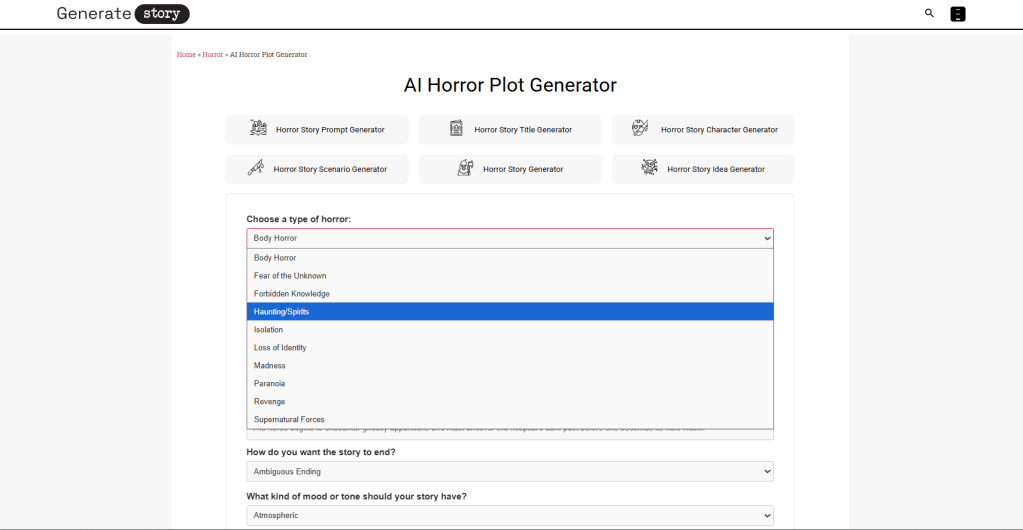
The first dropdown menu asks you to select a horror type, which determines the core fear mechanism of your plot. These categories align with common horror tropes that effectively build suspense and emotional impact. Your selection informs the generator whether to focus on psychological terror, supernatural elements, or physical horror, creating a tailored experience based on established genre conventions.
Establishing Setting and Atmosphere
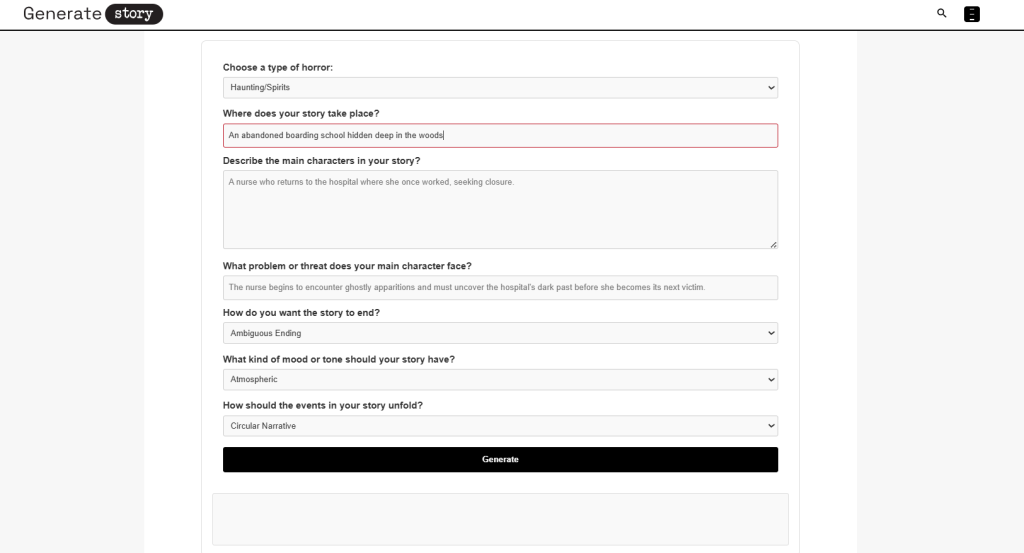
You provide the story’s location through a text field, describing where the horror unfolds. This setting detail works with your chosen mood selection to create atmospheric tension. The generator uses this information to incorporate environmental horror elements that enhance the sense of dread, much like classic horror stories that utilize isolated or abandoned locations to heighten fear.
Developing Character Dynamics
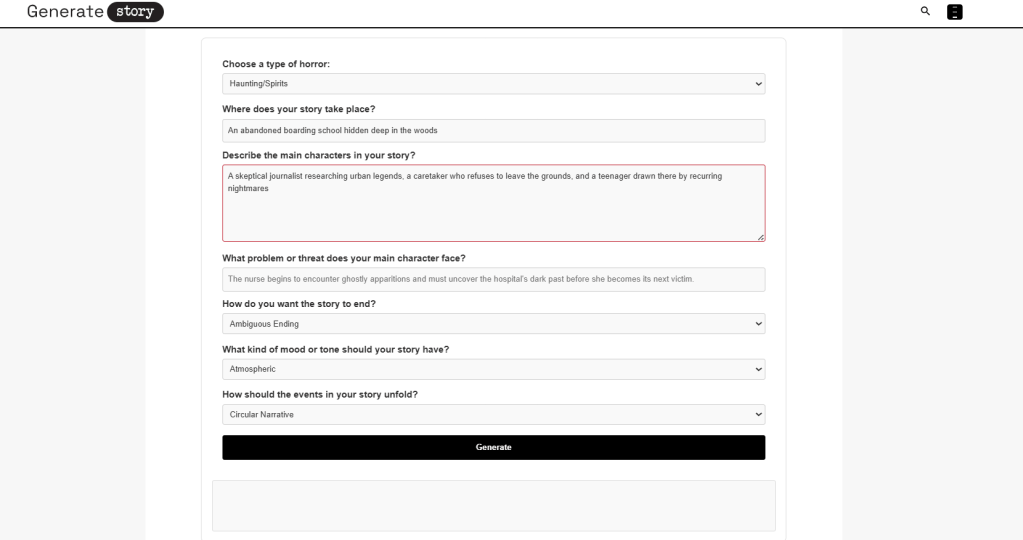
The character description textarea lets you outline your main characters’ roles and relationships. This input helps the generator create character-driven horror where personal fears and relationships contribute to the tension. You might describe a protagonist’s background or vulnerabilities, which the AI uses to develop horror elements that specifically target those weaknesses.
Defining the Central Conflict

You specify the main threat or problem your character faces, which serves as the plot’s driving force. This could range from supernatural entities to psychological deterioration. The generator uses this conflict to structure rising action and develop suspense, drawing from various horror plot types to create engaging narrative progression.
Selecting Narrative Structure
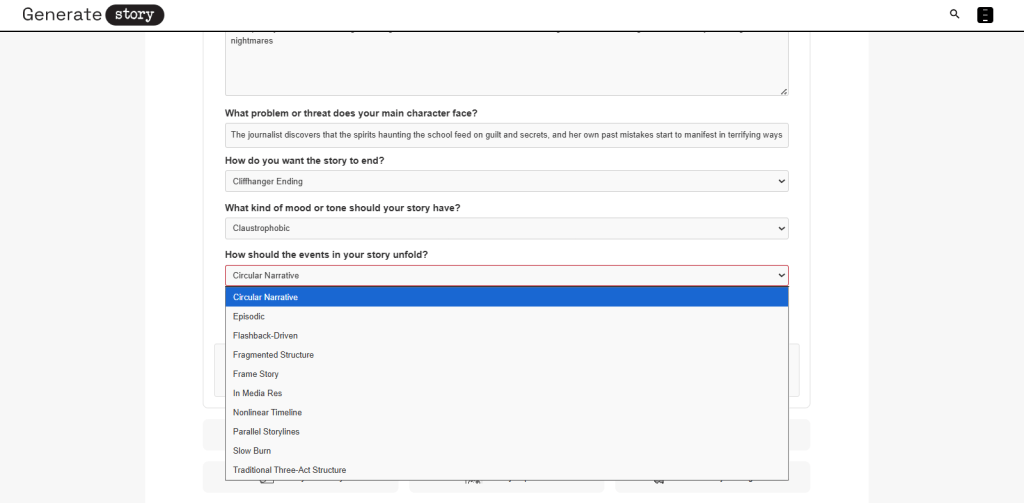
The structure dropdown lets you choose how events unfold, from traditional three-act progression to nonlinear timelines. This selection determines the pacing and revelation of horror elements throughout your story. The generator adapts its output to maintain tension according to your chosen narrative flow, whether you prefer slow-burn dread or immediate shocks.
Crafting the Ending
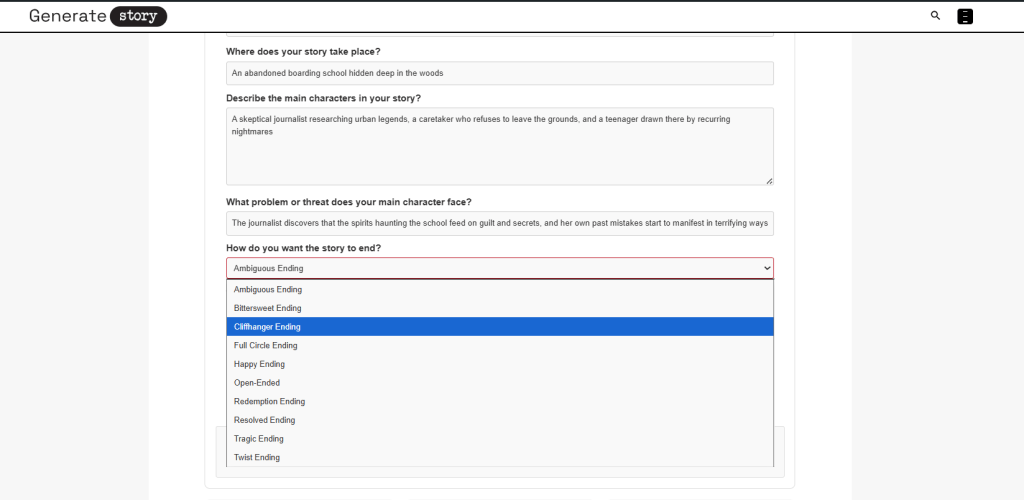
Your ending choice determines the story’s resolution type, from resolved conclusions to ambiguous finishes. This selection guides the generator in building toward your preferred outcome while maintaining horror consistency. The tool ensures your chosen ending type aligns with the established horror elements and character arcs throughout the plot.
Setting Tone and Mood
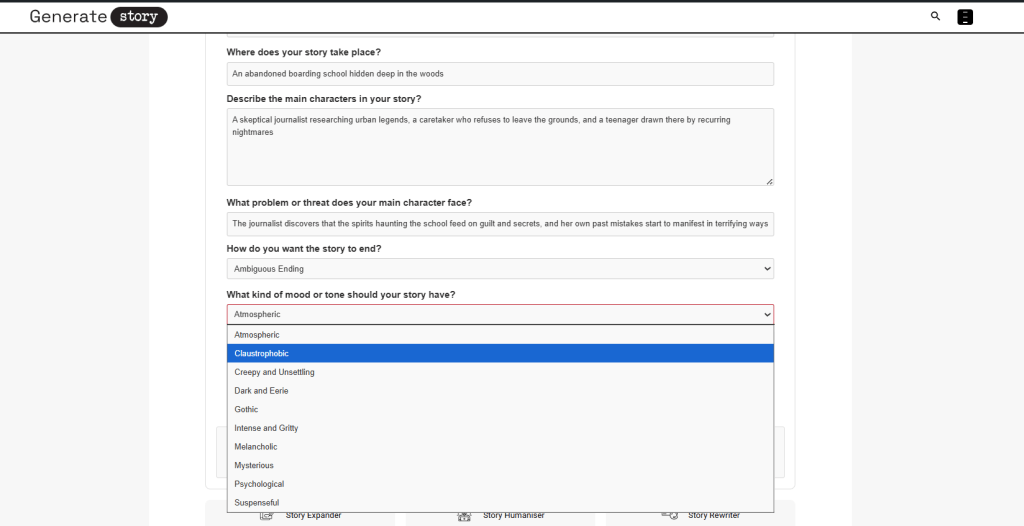
The mood dropdown allows you to specify the emotional atmosphere, from dark and eerie to psychologically intense. This selection influences how the generator presents horror elements and builds tension. The AI adjusts descriptive language and pacing to match your chosen tone, creating a cohesive horror experience that maintains consistent atmospheric pressure.
Why Use Generatestory’s Horror Plot Generator?
Let’s talk about why this tool matters for horror writers. You face unique challenges when crafting horror stories—building suspense, maintaining tension, and creating that perfect balance between revelation and mystery. A horror plot generator addresses these specific needs by providing structured frameworks that understand the genre’s mechanics. It helps you overcome the blank page syndrome while ensuring your story follows proven horror storytelling patterns.
Overcoming Creative Blocks with Genre-Specific Solutions
Horror writing often stalls when you can’t find the right balance between fear and narrative progression. This generator provides immediate solutions by offering plot structures that incorporate effective horror elements from the start. It understands how to build tension gradually while maintaining reader engagement, drawing from established horror tropes that consistently work within the genre. The tool becomes particularly valuable when you’re experimenting with different horror subgenres outside your comfort zone.
Structural Guidance for Horror-Specific Storytelling
Horror stories require particular narrative structures to maximize fear and suspense. The generator helps you implement these structures correctly, whether you’re working with traditional three-act formats or more experimental approaches. It ensures your plot maintains atmospheric tension while progressing logically toward your chosen ending type. This structural support prevents common pacing issues that can undermine horror stories, keeping readers engaged through proper scare distribution and revelation timing.
Character Integration with Horror Elements
Effective horror connects supernatural or psychological threats to character vulnerabilities. The generator helps develop this connection by integrating your character descriptions with appropriate horror elements. It ensures that threats specifically target character weaknesses, creating more personal and impactful fear experiences. You can enhance this character development further by using a horror story character generator to create more detailed protagonists with built-in fears and backstories.
Atmospheric Consistency Throughout the Narrative
Maintaining consistent mood and tone proves challenging in horror writing, where atmospheric pressure directly affects reader experience. The generator addresses this by ensuring every plot element supports your chosen tone, from setting descriptions to conflict resolution. It helps create cohesive horror environments where every story component contributes to the overall sense of dread. This consistency separates effective horror stories from those that lose tension through inconsistent atmospheric treatment.
Ending Construction with Horror Conventions
Horror endings require careful handling to satisfy readers while staying true to genre expectations. The generator helps craft endings that align with horror conventions, whether you choose resolved conclusions or ambiguous finishes. It ensures your ending type properly reflects the story’s established horror elements and maintains thematic consistency. This approach prevents endings that feel disconnected from the rest of the narrative, which can undermine the entire horror experience.
Efficient Plot Development for Multiple Projects
When working on multiple horror projects, the generator saves significant time by providing structured plot outlines quickly. It allows you to develop several story ideas simultaneously without losing creative momentum. This efficiency proves particularly valuable for horror writers who need to maintain fresh ideas while meeting deadlines or working on series projects. The tool’s ability to generate diverse plot types helps you explore various horror approaches without extensive research or development time.
Learning Horror Story Mechanics Through Practice
Using the generator provides practical education in horror storytelling mechanics. You see how different horror types employ specific fear-building techniques and how various endings affect reader satisfaction. This hands-on learning helps you internalize effective horror writing practices that you can apply to future projects. The experience demonstrates how different horror plot types create distinct emotional impacts, giving you deeper insight into genre mechanics beyond theoretical knowledge.
Frequently Asked Questions
How does the Horror Plot Generator create unique horror stories?
The Horror Plot Generator analyzes your specific inputs about horror type, setting, characters, and desired ending. It processes these elements through AI trained on horror storytelling patterns and tropes. The generator combines your unique details with established horror conventions to create original plot structures that maintain genre authenticity while reflecting your personal creative choices.
Can I use the Horror Plot Generator for commercial writing projects?
Yes, the Horror Plot Generator creates original content that you can use for commercial projects. The plots generated are unique combinations based on your inputs and the AI's processing of horror storytelling elements. You maintain creative ownership of the final story developed from the generated plot outline, making it suitable for professional writing work.
What makes this horror plot generator different from general story generators?
The Horror Plot Generator specializes specifically in horror narrative structures and fear-building techniques. Unlike general story generators, it understands horror-specific elements like atmospheric tension, suspense pacing, and horror tropes. The generator incorporates genre-specific knowledge about psychological terror, supernatural elements, and horror conventions that general tools might not properly execute.
How detailed are the plot outlines from the Horror Plot Generator?
The Horror Plot Generator provides structured outlines that include key plot points, character development guidance, and horror element integration. The detail level depends on your input specificity - more detailed character descriptions and setting information typically yield more comprehensive plots. The generator focuses on creating complete narrative arcs with proper horror pacing and tension distribution throughout the story structure.
Can the Horror Plot Generator help with writer's block for horror stories?
Yes, the Horror Plot Generator effectively addresses horror-specific writer's block by providing structured starting points. It helps overcome the initial hurdle of plot development by generating complete narrative frameworks based on your chosen horror elements. The generator offers fresh perspectives on horror storytelling that can break creative stagnation while maintaining genre-appropriate structure and tension building.
