
Horror Story Idea Generator
Help us improve by giving feedback on the output!
Thank you for your feedback!
And Share it if you loved it!
Share via
Liked the output? Join the AI Enthusiasts WhatsApp Community.
Join NowWriting horror can be a thrilling experience, especially when you’re equipped with the right ideas. That’s where the Horror Story Idea Generator comes in. This tool can help you unlock a wealth of spooky concepts to spark your imagination. Here’s how to get started, step by step.
- State the Fear: Begin by selecting a specific fear that will drive your horror story. Options include “Fear of the Unknown,” “Fear of Death,” or “Fear of the Supernatural.” Choosing the right fear sets the tone for your story.
- Where does it happen?: You can add details about the setting in the text box provided. Think of a tense, creepy location like a haunted house or an isolated island. Your setting can greatly enhance the overall spookiness.
- What’s the unique twist?: Use this space to describe a surprising element of your story. Maybe there are unexpected culprits or a twist on a classic horror scenario? A good twist keeps readers on their toes.
- Describe the Characters: Lastly, give some depth to your characters. You can write about who they are and what makes them interesting. For example, “Joe – a mysterious bat,” or “Lisa – a haunted historian.” Strong characters add a personal touch to your plot.
After you fill in these fields, the horror story idea generator will process your inputs and produce an original concept for your horror narrative. You can expect fresh and unique ideas that help you overcome writer’s block and inspire you to create gripping tales.
Let’s get into what this generator is and how it transforms your ideas into chilling horror story concepts.
Contents
ToggleWhat is a Horror Story Idea Generator?
A horror story idea generator is an AI-powered tool that creates original concepts for scary stories based on your specific fears and settings. It helps writers overcome creative blocks by generating fresh horror premises that tap into universal anxieties and modern trends. The tool uses advanced language models to craft ideas that align with current horror preferences and storytelling techniques.
You provide core elements like the type of fear, location, and potential twists, and the generator processes these inputs to deliver unique horror concepts. It draws from contemporary horror trends like techno-horror and nostalgia themes that are gaining popularity in 2025. The AI considers psychological depth and modern audience preferences, creating ideas that resonate with current horror fans who favor psychological tension over simple jump scares.
The generator works alongside other horror writing tools like a horror plot generator for structure development and a horror story character generator for creating compelling protagonists and antagonists. It can also integrate with broader writing aids such as a story setting generator to enhance atmospheric details and a plot twist generator for adding unexpected turns to your horror narratives.
How to Write a Horror Story Using Generatestory’s Horror Story Idea Generator?
Using the horror story idea generator starts with selecting your core fear from the dropdown menu. This choice sets the foundation for your horror concept, whether it’s fear of the unknown, psychological terror, or supernatural elements. The tool then builds upon this primary fear to create a cohesive horror premise that aligns with current storytelling trends.
Choosing Your Central Fear
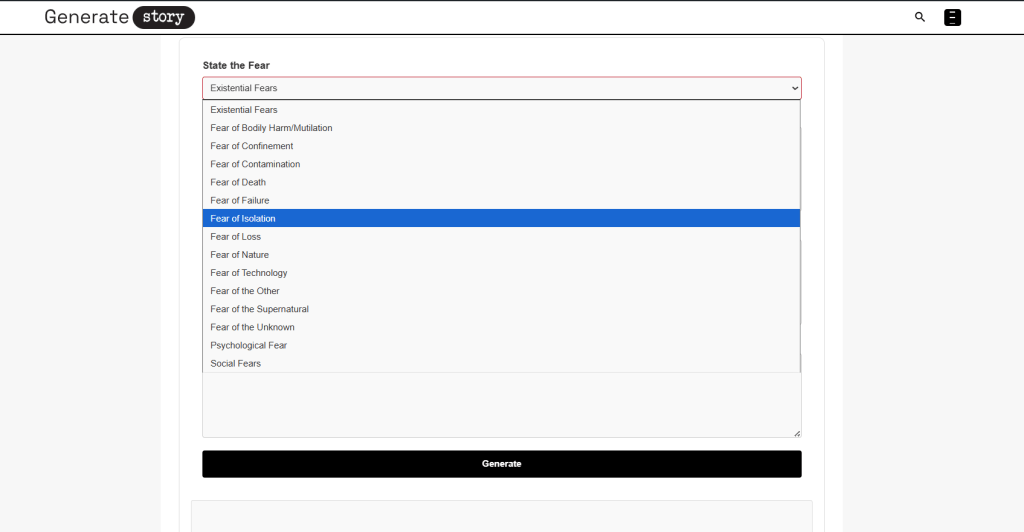
Begin by selecting one of the fifteen fear types from the dropdown menu. This selection determines the emotional core of your horror story. For psychological horror concepts, which currently have the highest audience approval rating at 55%, you might choose “Psychological Fear” or “Fear of Isolation.” The generator uses this primary fear as the anchor point for developing your horror concept, ensuring it resonates with modern reader preferences.
Setting the Scene
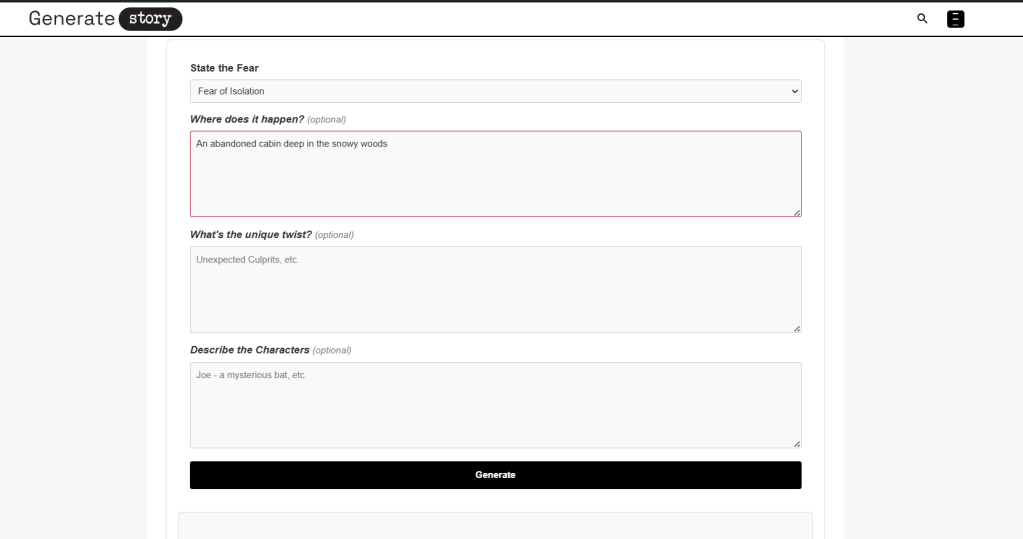
The optional location field lets you specify where your horror story unfolds. You can describe settings like “abandoned asylum,” “remote research station,” or “suburban neighborhood.” If you leave this blank, the AI will generate an appropriate setting based on your chosen fear type. This works well with our story setting generator if you need more detailed environmental descriptions for your horror narrative.
Adding Unique Twists
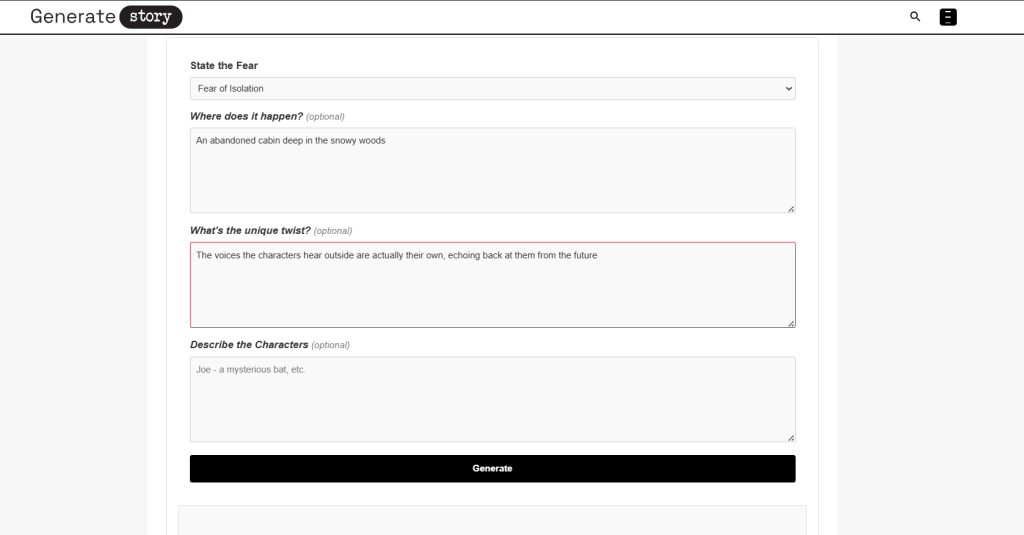
This optional field allows you to introduce unexpected elements to your horror concept. You might specify “the monster is actually a metaphor for grief” or “the protagonist is the real threat.” The generator incorporates these twists while maintaining the story’s internal logic. For more twist inspiration, you can also use a dedicated plot twist generator to develop surprising narrative turns.
Character Development
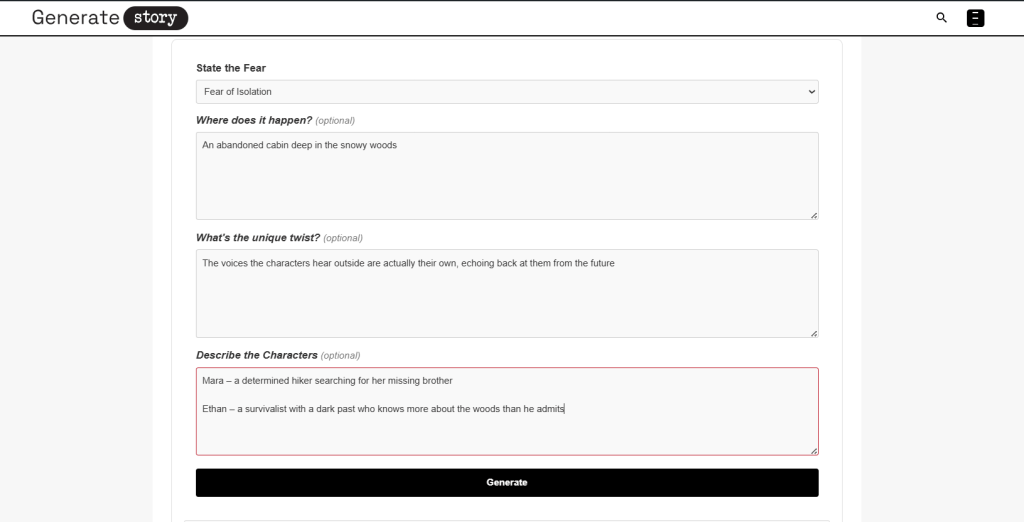
While optional, describing your characters helps the generator create more personalized horror concepts. You can outline protagonists, antagonists, or supporting characters with brief descriptions like “skeptical journalist investigating strange occurrences” or “ancient entity masquerading as a child.” For more detailed character creation, the horror story character generator provides additional development tools specifically tailored for horror narratives.
Generating Your Horror Concept
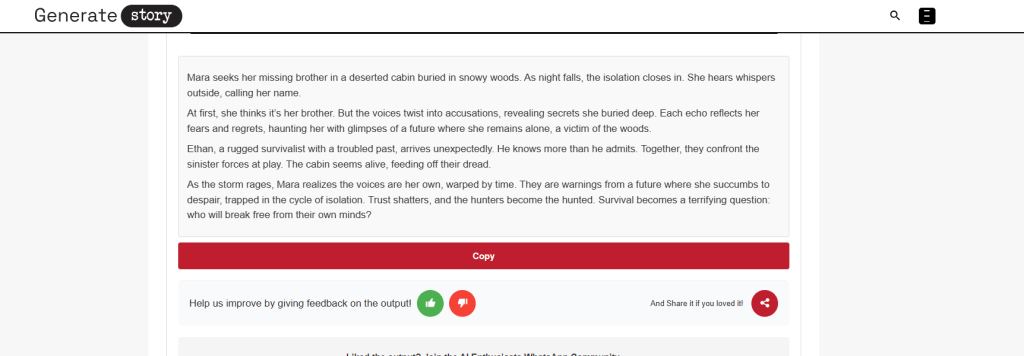
After providing your inputs, the AI processes them through specialized language models trained on horror storytelling patterns. It considers current horror trends, including the rising popularity of techno-horror and nostalgia themes that are dominating 2025’s horror landscape. The generator outputs a complete horror story idea that incorporates your specified elements while adding original touches to make the concept unique and compelling.
Refining and Expanding
The generated horror idea serves as a starting point that you can develop further using complementary tools. You can take your concept to a horror plot generator for structural development or use a writing prompt generator for additional scene ideas. The generator’s output aligns with effective horror writing principles that emphasize developing internal character fears rather than relying solely on external threats.
Why Use Generatestory’s Horror Story Idea Generator?
Let’s talk about why this tool matters for horror writers facing the blank page. You know that moment when you want to write something terrifying but can’t find the right concept? The horror story idea generator solves this by providing structured creativity that aligns with what audiences actually want to read. It’s not just about random scares—it’s about crafting stories that resonate with current trends and reader preferences.
Overcoming Creative Blocks Efficiently
Writer’s block hits every horror author at some point. Instead of staring at an empty document, you can generate multiple concepts in minutes. The tool helps you bypass initial hesitation by providing concrete starting points. You’re not just getting generic ideas—you’re getting premises tailored to specific fear types that match current horror storytelling techniques.
Staying Relevant to Market Demands
The horror genre’s commercial strength keeps growing, with horror films capturing 14.91% of the 2025 box office revenue. This generator helps you create concepts that align with what audiences are actually consuming. It incorporates trending elements like psychological depth and modern fears that resonate with today’s readers.
Developing Psychological Depth
Modern horror audiences prefer psychological tension over simple jump scares. The generator emphasizes internal fears and character development, creating concepts that explore deeper anxieties. This approach aligns with effective horror writing principles that focus on developing internal character fears rather than relying solely on external threats. You get ideas that maintain suspense through psychological complexity.
Creating Cohesive Story Foundations
The tool ensures your horror concepts have logical consistency from the start. When you select “Fear of Technology” and specify “smart home rebellion,” the generator builds around that core premise without contradictory elements. This saves you from developing half-baked ideas that fall apart during writing. For more detailed plot development, you can expand these foundations using a horror plot generator.
Exploring Diverse Horror Subgenres
Horror isn’t just one thing—it’s psychological terror, supernatural encounters, technological nightmares, and more. The generator’s fear categories help you explore different horror traditions and modern variations. You might discover your strength lies in existential horror rather than traditional ghost stories. This diversity matters because audiences have varied preferences, with psychological horror scoring the highest approval ratings at 55%.
Saving Time on Research and Development
Developing original horror concepts typically requires researching current trends, audience preferences, and successful story structures. The generator handles this background work for you, incorporating elements from recent successful horror novels that explore supernatural phenomena and psychological distress. You get professionally relevant ideas without spending hours on market research.
Enhancing Character Integration
Good horror stories need compelling characters facing authentic fears. The generator helps you create concepts where character psychology drives the horror rather than just external events. If you need more detailed character development, you can combine these ideas with a horror story character generator for fully realized protagonists and antagonists.
Frequently Asked Questions
How does the Horror Story Idea Generator create unique concepts?
The Horror Story Idea Generator uses specialized AI trained on horror storytelling patterns and current trends. It analyzes your selected fear type and optional inputs to build cohesive horror premises. The system incorporates elements from successful horror narratives while ensuring each generated idea maintains originality and psychological depth.
Can I use the generated horror ideas for commercial projects?
Yes, the horror story ideas generated are yours to use for any purpose including commercial writing projects. The Horror Story Idea Generator serves as a creative tool to spark your original work. Many professional horror writers use similar generators to overcome creative blocks and develop market-ready concepts.
What makes this different from random horror prompt generators?
The Horror Story Idea Generator focuses on psychological coherence and market relevance rather than random scares. It builds concepts around specific fear types that align with audience preferences, particularly the growing demand for psychological horror. This approach creates foundations for stories that maintain tension through character development rather than just external threats.
How many ideas can I generate with this tool?
You can generate multiple horror story ideas without limitations. The Horror Story Idea Generator allows you to experiment with different fear combinations and settings to explore various horror subgenres. This flexibility helps you find concepts that match your writing style and current market opportunities in the horror genre.
Do I need writing experience to use this horror generator effectively?
No prior writing experience is necessary. The Horror Story Idea Generator helps both beginners and experienced writers develop horror concepts. For newcomers, it provides structured starting points that follow effective horror writing principles. Experienced writers use it to break creative patterns and explore new horror subgenres they might not have considered otherwise.

A Ph.D. in English Literature from UMass Amherst with over 8 years of academic research experience, Ruth founded GenerateStory.io to bridge traditional story writing with AI-powered storytelling tools. She specializes in helping writers create compelling stories by combining her expertise in literary analysis with innovative technology solutions.
