
Mystery Story Ideas Generator
Help us improve by giving feedback on the output!
Thank you for your feedback!
And Share it if you loved it!
Share via
Liked the output? Join the AI Enthusiasts WhatsApp Community.
Join NowTo start using the tool, follow these simple steps:
- Choose a setting. Input where your story happens. For instance, you might choose “An isolated island.” This sets the stage for your mystery.
- Define your main character. Enter who you want at the center of the story. A suggestion could be “A retired detective.” This adds depth to your narrative.
- Identify the mystery. Specify what needs to be solved—like “A series of strange disappearances.” This is the crux of your plot.
- Select a time period. Input when the story takes place, such as “The 1950s, in a forest.” The timeframe influences the atmosphere and details of your mystery.
- Set the mood. Choose from options like “Dark and suspenseful” or “Lighthearted and fun.” Your mood choice shapes the overall tone of your story.
As you experiment with different inputs, expect to receive a range of wild and compelling story prompts. For example, mixing an isolated island with a retired detective and a series of disappearances during a gritty 1950s setting can yield unique angles, helping you spark fresh ideas.
Let’s get into what this generator can do and how it works under the hood, allowing you to craft a thrilling mystery narrative with ease.
Contents
ToggleWhat is a Mystery Story Ideas Generator?
A mystery story ideas generator is an AI-powered tool that creates original plot concepts and narrative prompts specifically for mystery fiction. It helps writers overcome creative blocks by generating fresh whodunit scenarios, detective story frameworks, and suspenseful mystery plots based on your input preferences.
The generator works by analyzing your chosen setting, character details, mystery type, and mood to produce cohesive story concepts that follow classic mystery structures. It draws from established mystery tropes while avoiding cliches, creating prompts that can range from cozy mysteries to hardboiled detective stories. You can build on these ideas using complementary tools like a mystery plot generator or develop your characters with a character name generator for deeper narrative development.
This tool understands current mystery trends, incorporating themes like betrayal and disappearances that dominate contemporary mystery fiction. It generates ideas that align with what readers expect while maintaining originality, whether you’re crafting a psychological thriller or a classic whodunit. The generated prompts serve as starting points that you can expand into full narratives using additional resources like a writing prompt generator for broader inspiration.
How to Write a Mystery Story Using Generatestory’s Mystery Story Ideas Generator?
Using the mystery story ideas generator is straightforward once you understand its input fields and how they work together. You provide specific details about your desired mystery story, and the AI processes these elements to create cohesive narrative concepts that match your vision.
Setting the Scene
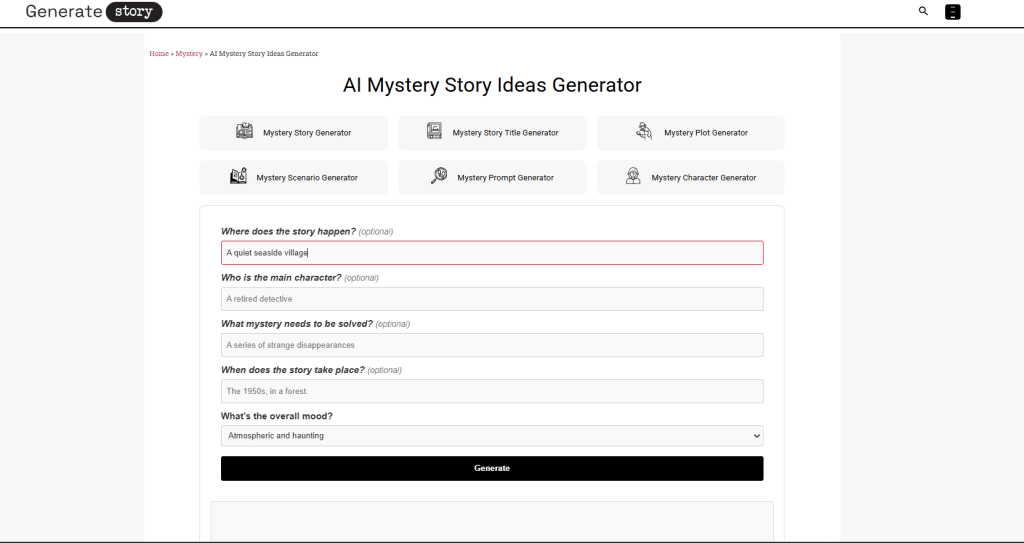
Start by describing where your mystery takes place. The location field helps establish atmosphere and context for your story. An isolated island creates different possibilities than a bustling city or quiet suburban neighborhood. The generator uses this setting to shape the mystery’s constraints and opportunities, much like how classic mysteries use their environments to heighten tension.
Defining Your Detective

Your main character field lets you specify who’s solving the mystery. A retired detective brings different skills and perspectives than an amateur sleuth or journalist. This character definition influences how the mystery unfolds and what types of clues might be relevant. The generator considers character expertise and background when creating plot ideas that fit their capabilities.
Crafting the Core Mystery
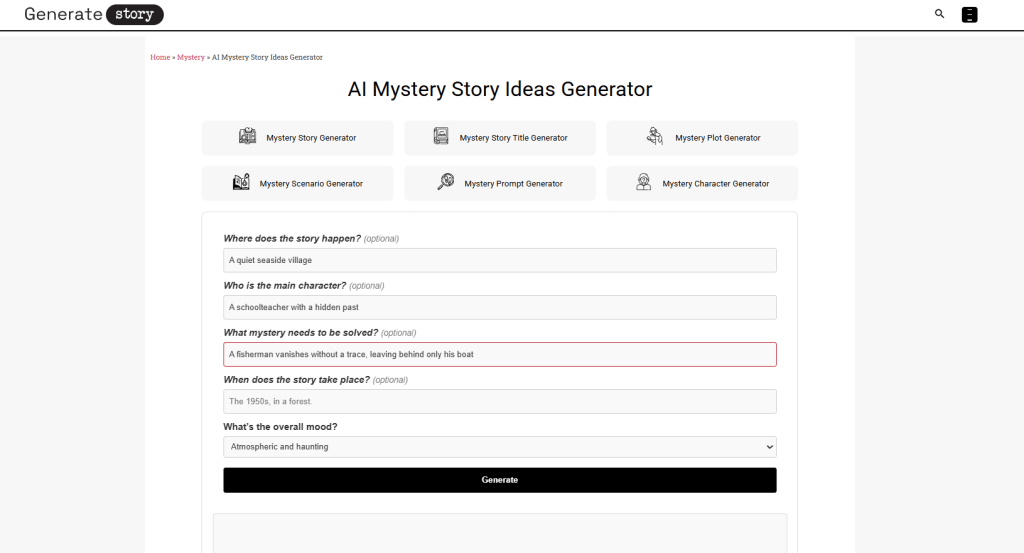
The mystery description is where you define what needs solving. This could be a murder, disappearance, theft, or any unexplained event. Specific mysteries like “a series of strange disappearances” prompt different story structures than single incidents. The generator analyzes this input against current mystery trends, including popular themes like those found in contemporary secret-centered mysteries that dominate current fiction.
Establishing Time Period
The time period field helps anchor your story historically or seasonally. A 1950s forest mystery differs significantly from a modern urban setting or futuristic scenario. This temporal context influences available technology, social norms, and investigative methods, which the generator incorporates into the plot ideas it creates.
Selecting the Mood
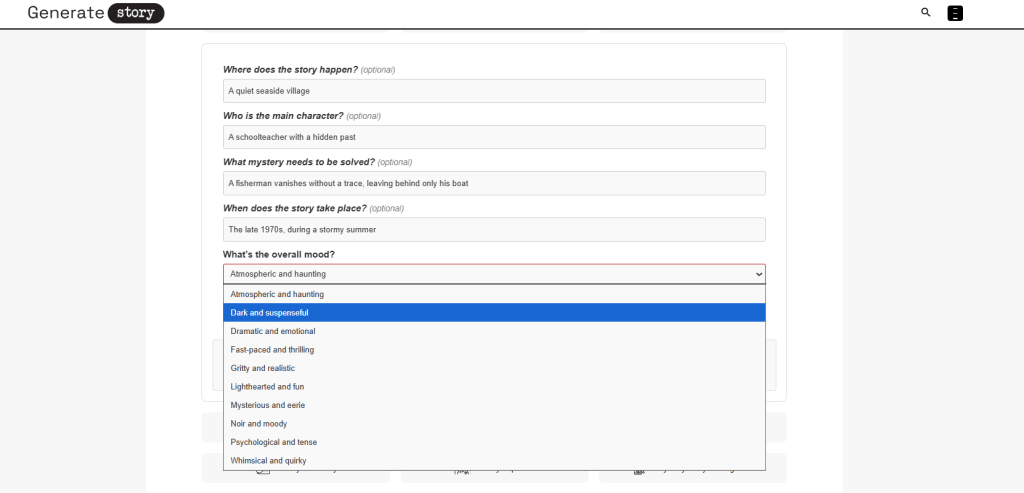
The mood dropdown offers specific tonal options that guide the generator’s output. Choosing “dark and suspenseful” produces different ideas than “lighthearted and fun” or “noir and moody.” This selection ensures the generated concepts match the emotional atmosphere you want to create, whether you’re aiming for psychological tension or cozy mystery vibes.
Generating and Refining Ideas

After entering your preferences, the generator combines these elements to create multiple mystery story concepts. Each idea incorporates your specified setting, character, mystery type, time period, and mood into a cohesive prompt. You can then use these generated ideas as starting points for further development with tools like a mystery plot generator to expand the narrative structure or a story conflict generator to add complexity to your mystery.
Working with Generated Output
The tool produces story ideas that follow mystery conventions while avoiding overused tropes. These prompts often include unexpected twists and logical progressions that maintain suspense. Many current mystery stories, like those featured in bestselling mystery thrillers, use similar structural elements that balance familiarity with innovation, which the generator aims to replicate in its output.
Why Use Generatestory’s Mystery Story Ideas Generator?
Let’s talk about why this mystery story ideas generator matters for your writing process. You might think you can brainstorm mystery concepts on your own, but creative blocks hit everyone eventually. That’s where having a structured tool becomes valuable—it provides fresh perspectives when your own ideas start feeling repetitive or predictable.
The generator helps you explore mystery themes that are currently resonating with readers. Current trends show that stories involving betrayal themes and disappearances dominate the mystery genre, and this tool incorporates those popular elements while maintaining originality. It keeps your story concepts relevant without making them feel derivative of existing works.
Overcoming Creative Ruts
Every writer hits points where ideas just won’t come. The mystery generator acts as a creative jumpstart, providing multiple story concepts based on your specific parameters. Instead of staring at a blank page, you get workable premises that you can immediately begin developing. This is particularly useful when you’re working against deadlines or need to maintain consistent creative output.
Exploring Diverse Mystery Subgenres
You might naturally gravitate toward certain types of mysteries, whether that’s cozy crime or hardboiled detective stories. The generator pushes you outside your comfort zone by suggesting concepts across different mystery subgenres. By adjusting the mood dropdown to options like “psychological and tense” or “noir and moody,” you discover narrative possibilities you might not have considered otherwise.
Building Cohesive Story Foundations
The tool ensures all story elements work together harmoniously. When you specify a retired detective character and a 1950s forest setting, the generator creates mysteries that fit that specific combination. This coherence saves you from the frustration of developing a concept only to realize later that the pieces don’t logically fit together. You can then expand these solid foundations using complementary tools like a mystery scenario generator for more detailed scene development.
Saving Time on Research and Development
Developing mystery plots from scratch requires significant research into investigative procedures, historical contexts, and genre conventions. The generator handles much of this groundwork by incorporating established mystery structures and logical progressions. This allows you to focus your energy on character development and narrative execution rather than spending hours researching how specific mysteries would realistically unfold.
Generating Multiple Options Quickly
Sometimes you need several story concepts to choose from, whether you’re deciding which idea to pursue or need options for different projects. The tool produces varied prompts based on the same input parameters, giving you multiple directions to explore. This variety ensures you don’t get stuck with a single concept that might not fully capture what you’re trying to achieve with your mystery storytelling.
Maintaining Freshness in Your Writing
Even experienced mystery writers can fall into patterns of using similar plot devices or character types. The generator introduces unexpected elements and combinations that keep your writing fresh. By suggesting unconventional pairings of settings, characters, and mysteries, it helps you avoid the cliches that can make mystery stories feel predictable to readers.
Frequently Asked Questions
How does the Mystery Story Ideas Generator create original concepts?
The Mystery Story Ideas Generator analyzes your specific inputs about setting, character, mystery type, time period, and mood. It cross-references these elements against established mystery structures and current genre trends to produce cohesive story prompts. The AI ensures originality by avoiding overused tropes while maintaining logical plot progressions that fit mystery genre expectations.
Can I use the Mystery Story Ideas Generator for different mystery subgenres?
Yes, the Mystery Story Ideas Generator works across various mystery subgenres. The mood dropdown specifically lets you choose between options like cozy mystery ("lighthearted and fun"), hardboiled detective ("noir and moody"), or psychological thriller ("psychological and tense"). Each selection guides the AI to generate ideas appropriate for that specific subgenre's conventions and reader expectations.
What makes this mystery story prompt generator different from basic idea generators?
The Mystery Story Ideas Generator specializes in mystery-specific narrative structures rather than general story ideas. It understands whodunit mechanics, clue placement, red herrings, and resolution patterns that define quality mystery fiction. Unlike basic generators, it ensures all story elements—setting, character, mystery type—work together cohesively within mystery genre constraints.
How many story ideas can the Mystery Story Ideas Generator produce at once?
The Mystery Story Ideas Generator typically generates multiple story concepts per session. The exact number varies based on your input specificity, but you'll receive several complete mystery premises that incorporate all your specified elements. This allows you to choose the most promising concept or combine elements from different generated ideas.
Can I refine the output from the Mystery Story Ideas Generator?
Yes, the Mystery Story Ideas Generator produces starting points that you can develop further. Many writers use the generated concepts as foundations, then expand them using complementary tools like mystery plot generators or character development resources. The initial output provides the core mystery premise, which you can then elaborate into full narratives.

A Ph.D. in English Literature from UMass Amherst with over 8 years of academic research experience, Ruth founded GenerateStory.io to bridge traditional story writing with AI-powered storytelling tools. She specializes in helping writers create compelling stories by combining her expertise in literary analysis with innovative technology solutions.
